
Blue Domes Café
ARCHIVE PHOTOS
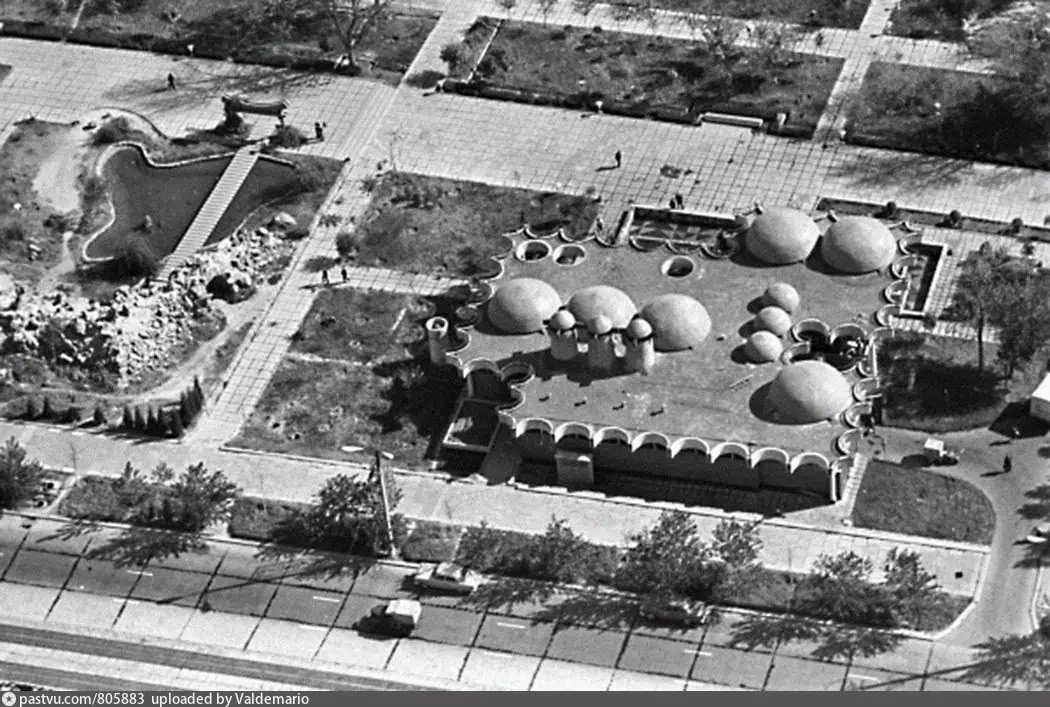
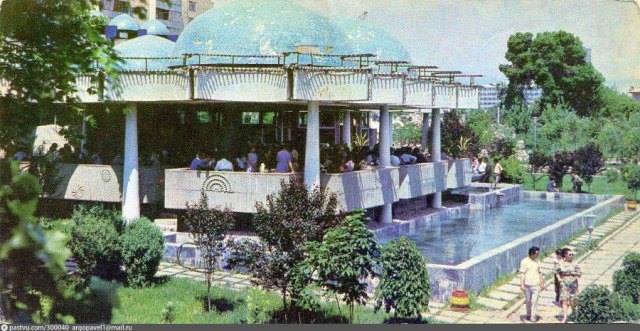
Blue Domes Café became a pivotal point in the history of Tashkent’s modernist architecture, marking a direction characterized by the integration of forms and elements borrowed from the architectural heritage of Central Asia into contemporary designs.
The café opened in 1970 on a new boulevard in the city center, which, like the Lenin Museum, was timed to coincide with the 100th anniversary of Vladimir Lenin’s birth.
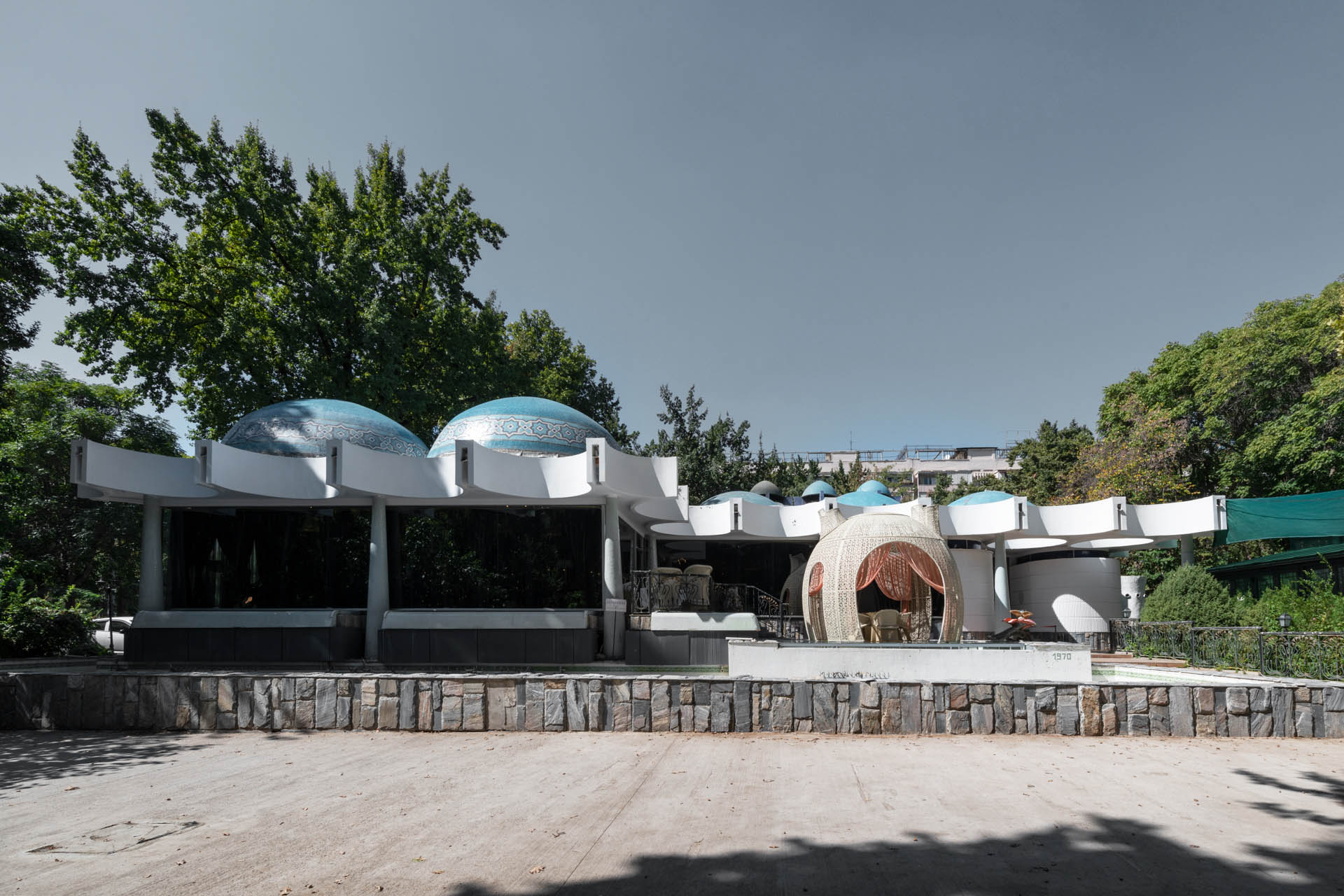
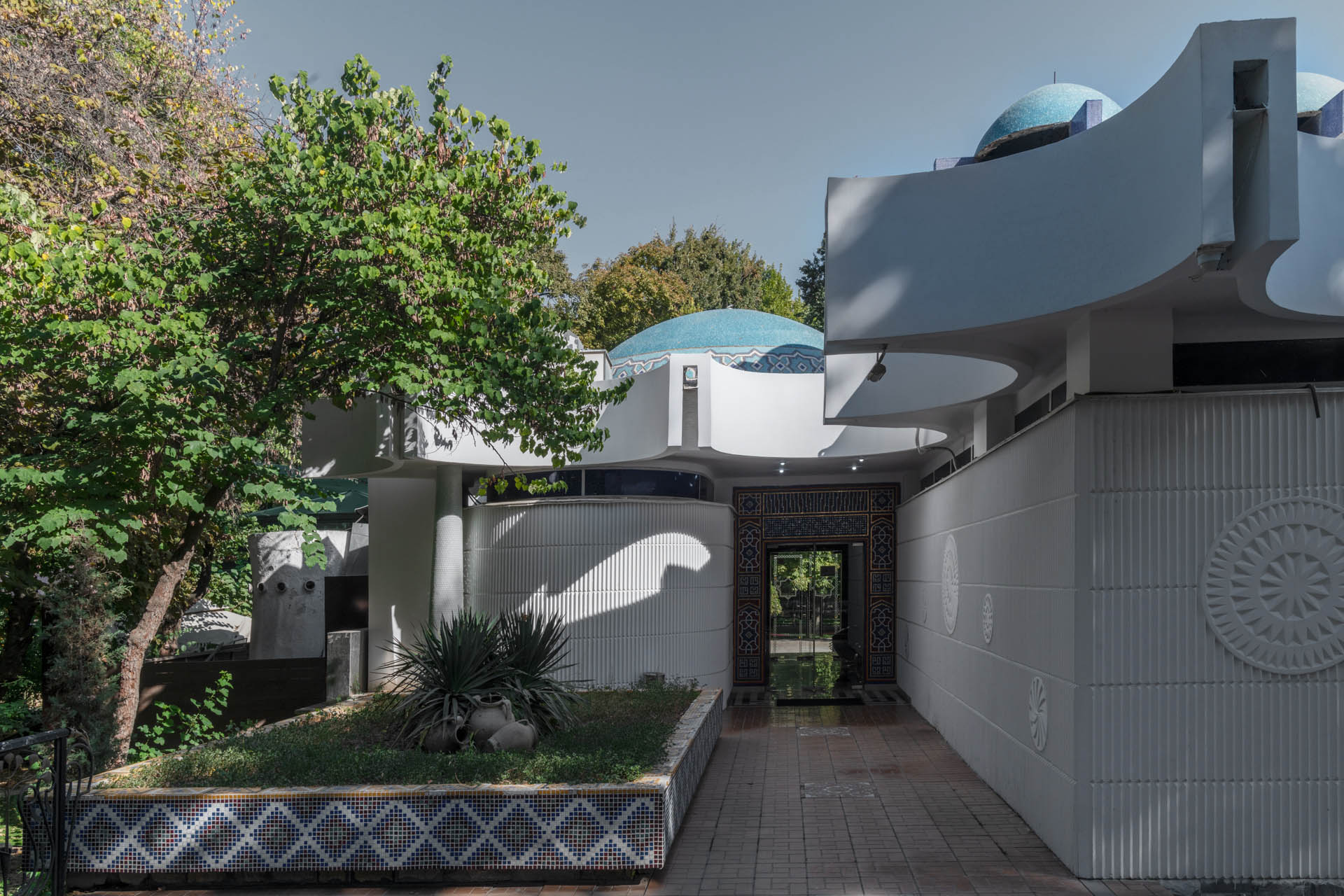
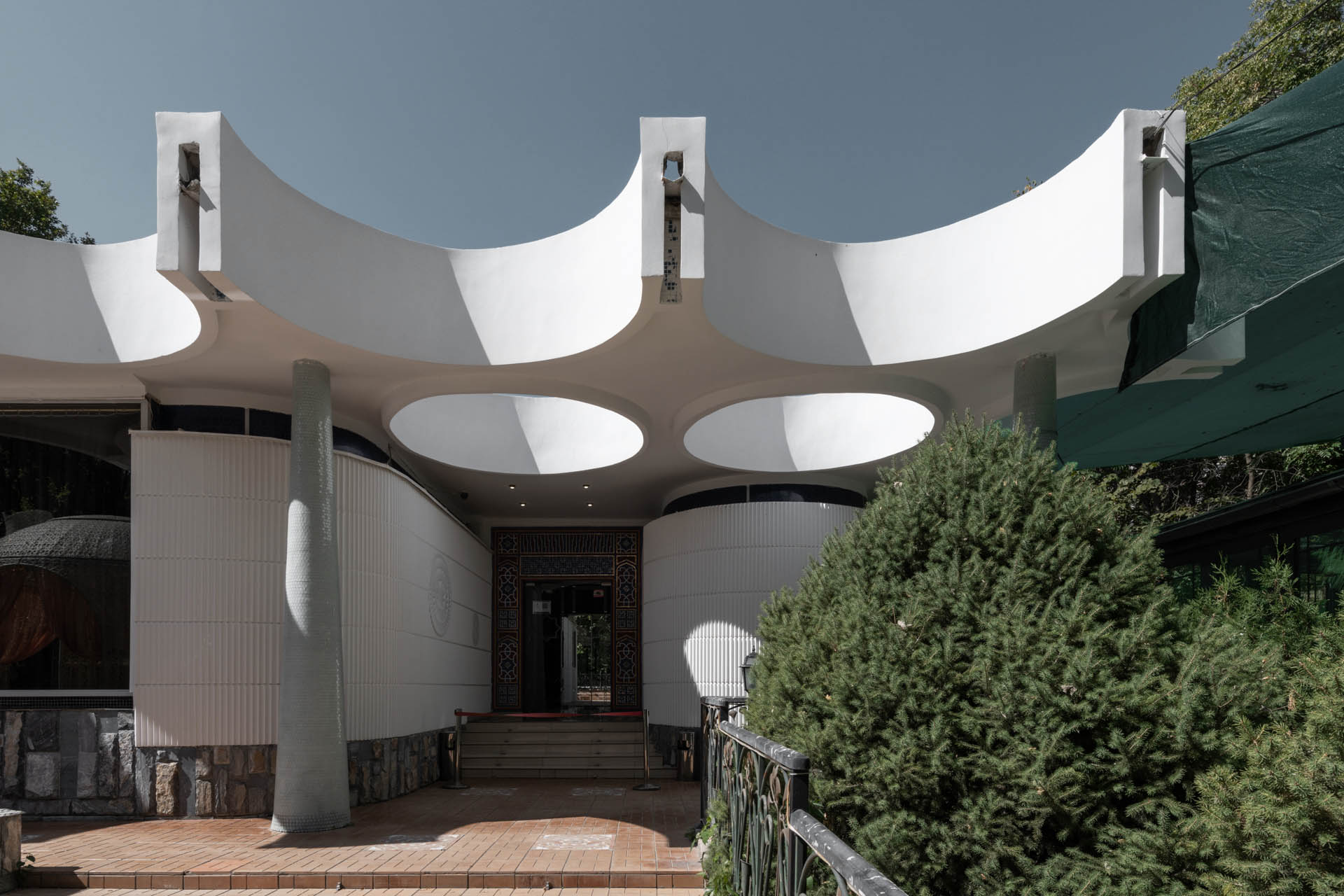
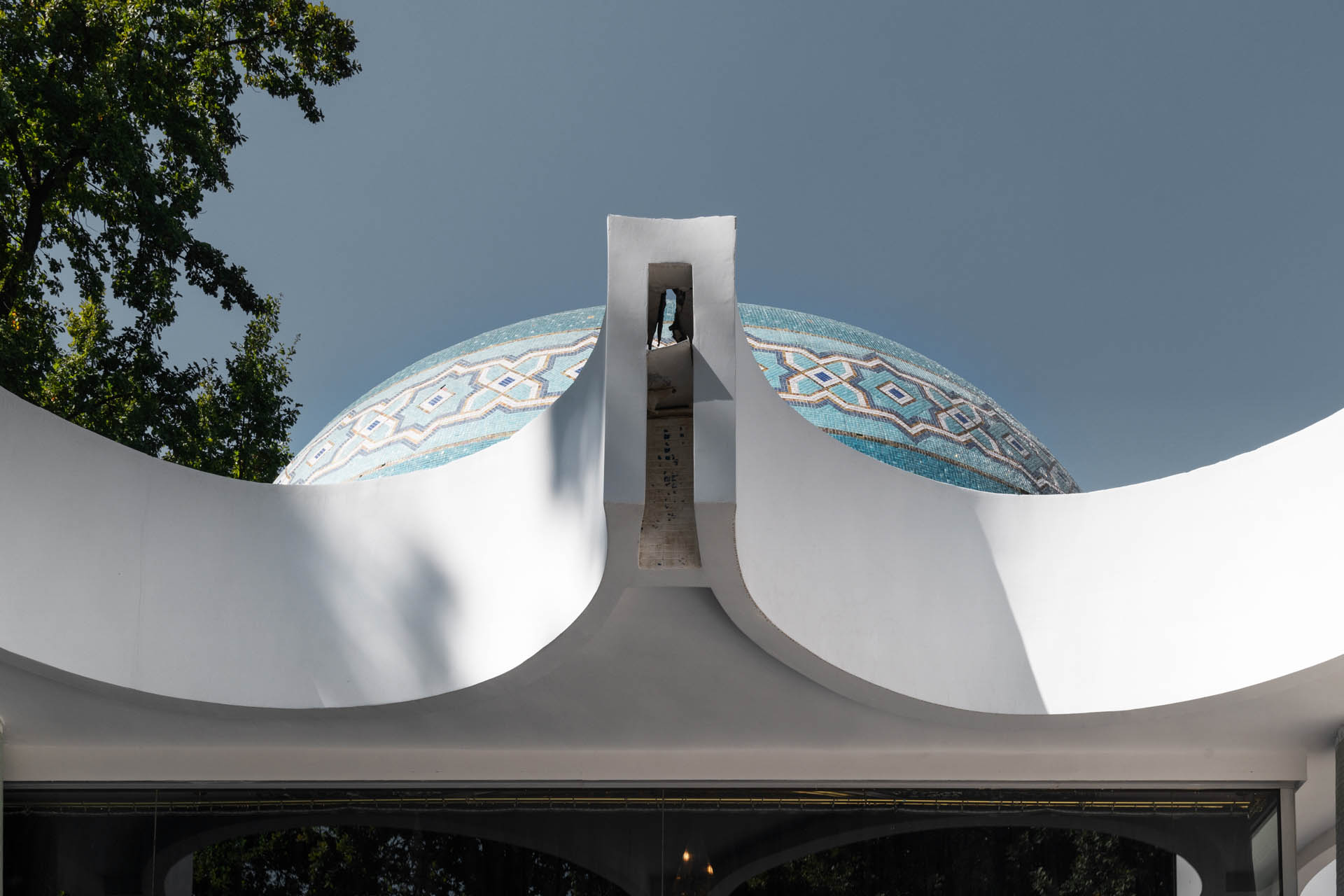
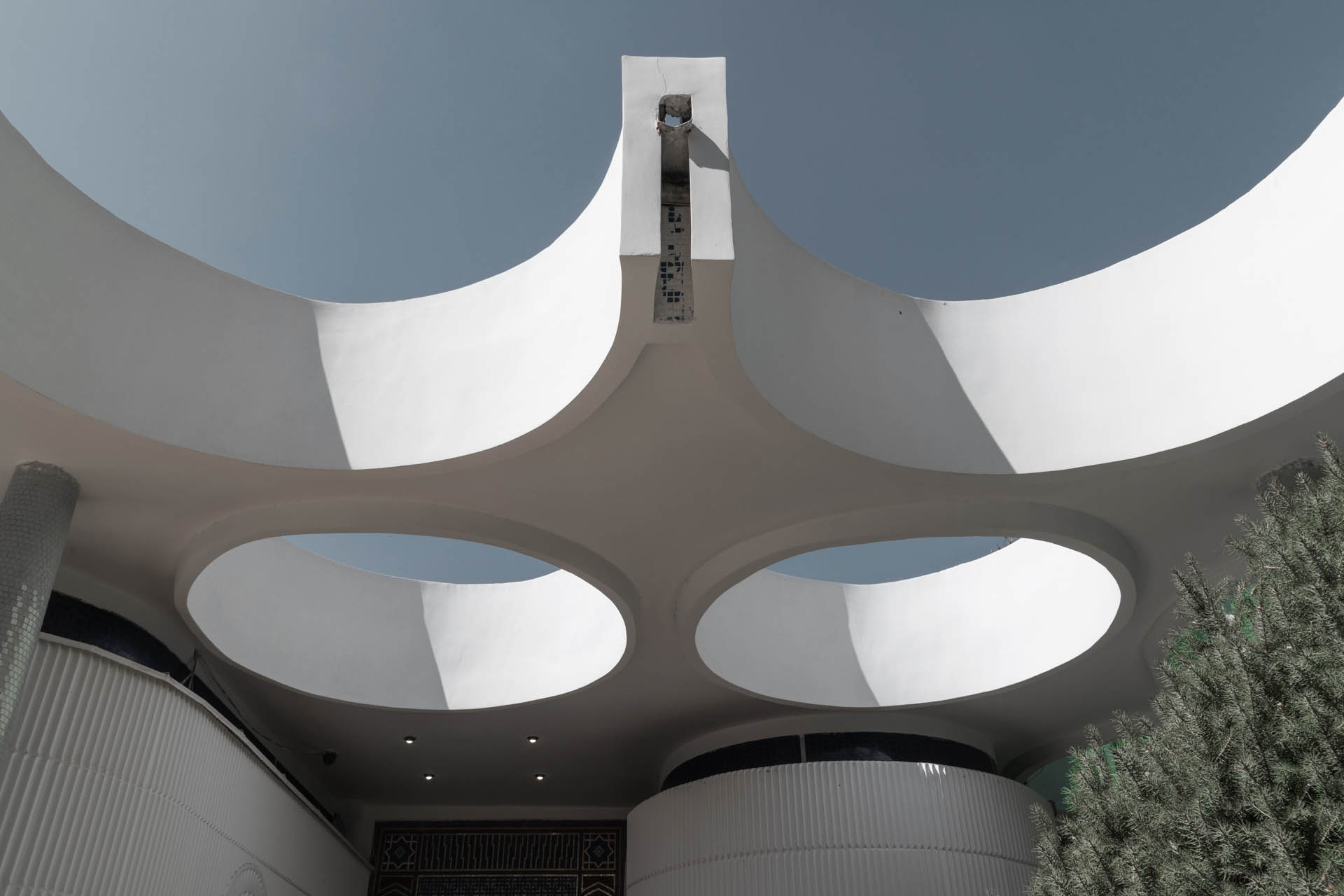
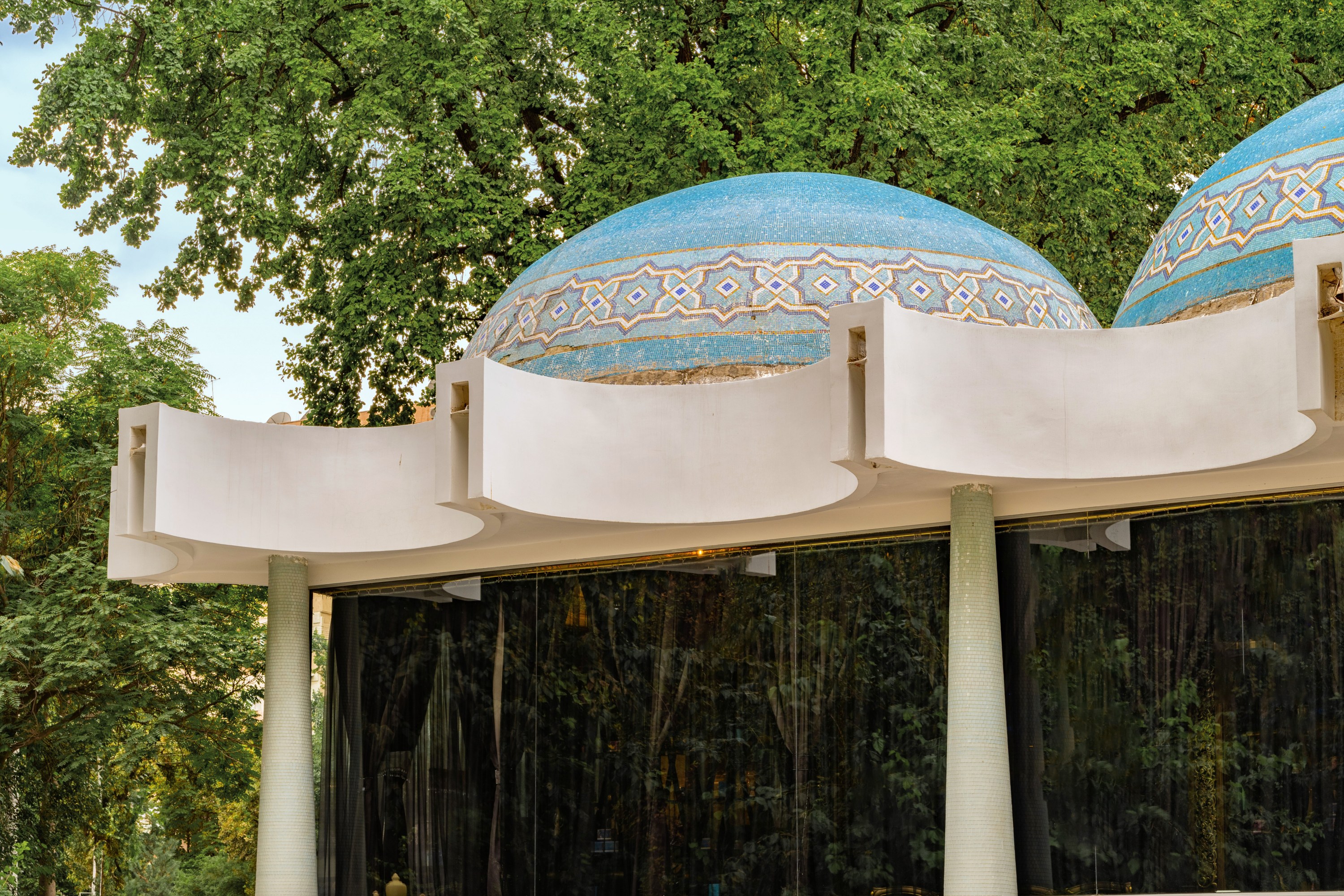
Young architect Vil Muratov chose a design that directly referred to the historical architecture of Uzbek cities. Dividing the building plan into squares, he incorporated six large domes, three medium ones, and three small ones, and elevated them on conical columns. In terms of color, the architect drew inspiration from the mosaic turquoise characteristic of the domes of Samarkand. A unifying element was the cornice, which retained modularity thanks to its semicircular protruding elements.
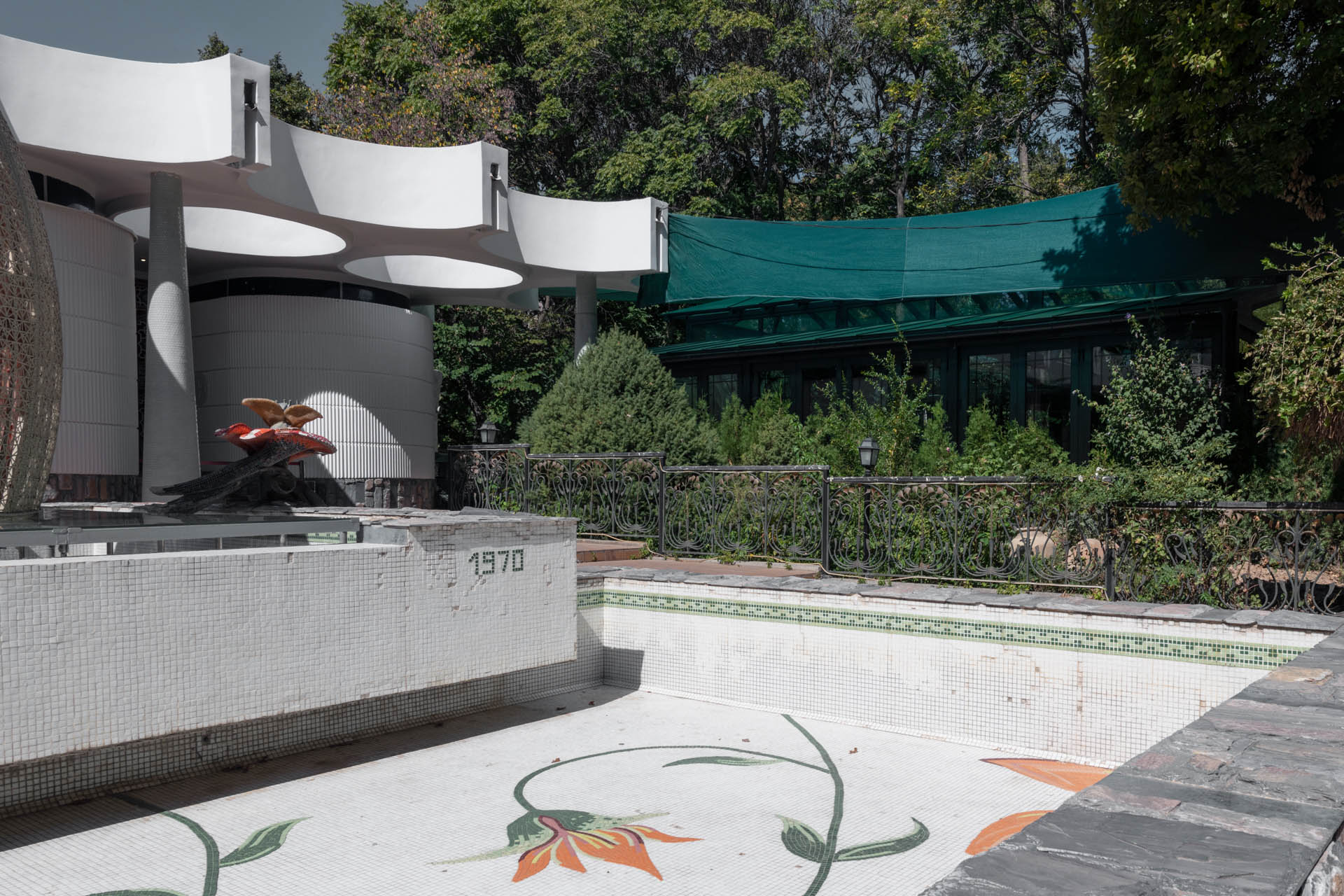
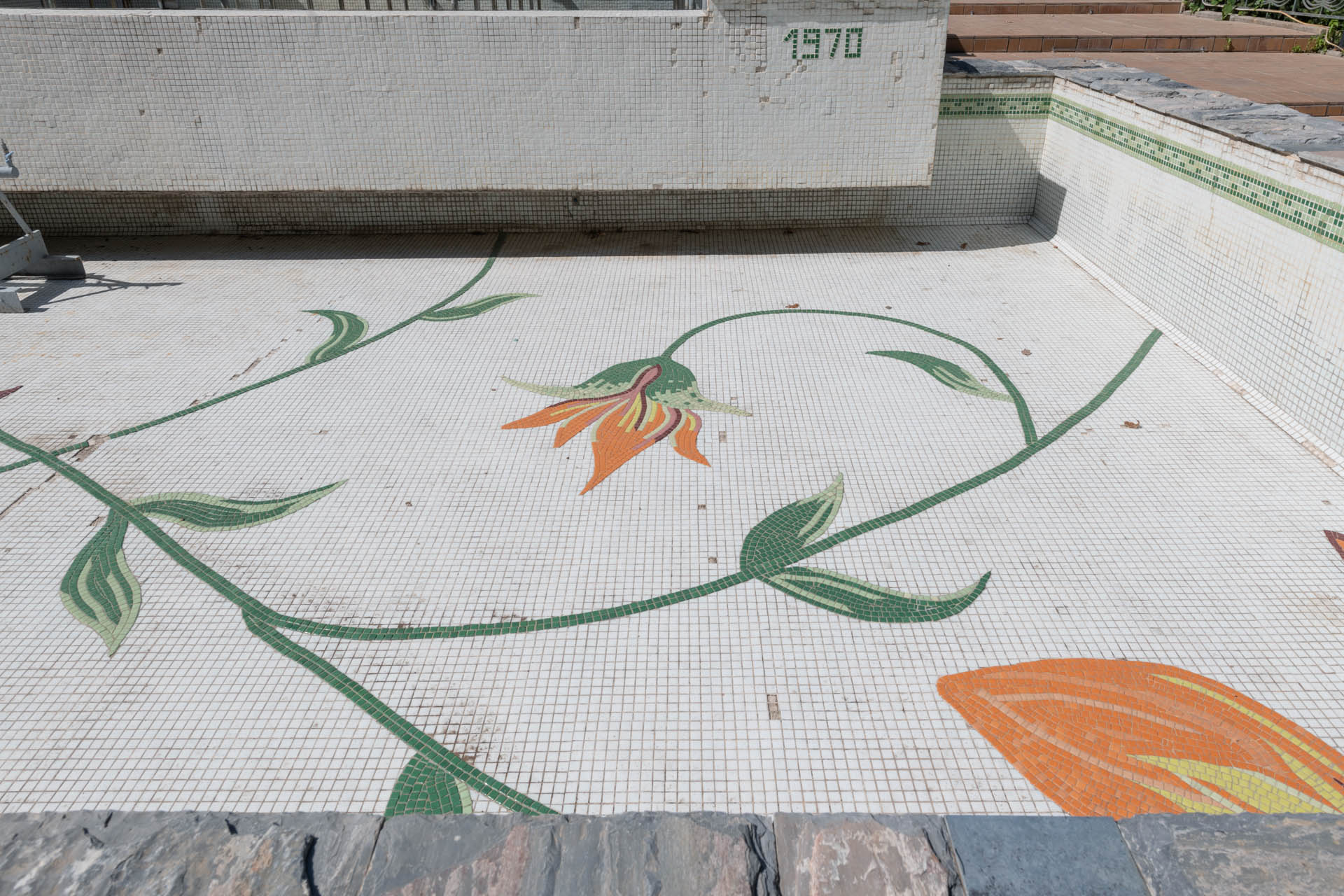
The pools located on the side of the main boulevard alley were a defining feature of the building’s exterior. Reflected in the water, the café evoked the image of a traditional Uzbek teahouse.
The establishment was designed to accommodate 150 seats. The spaces of the winter and summer halls flowed into each other and featured a free asymmetrical layout, divided into two levels with a vertical shift of three stair steps between them. The café’s plan combined several zones: a vestibule with a cloakroom, a winter hall with a buffet, a summer hall on terraces under the domes, and kitchen space.
In addition to concrete and plaster, various types of marble were used to construct the building, from which the walls and floors of the winter hall were laid, as well as the stylobate with the edges of two decorative pools. Ceramic tiles were also used. In addition, objects of traditional applied art were inlaid into the interiors: wood carving, plaster carving, and copper chasing.
The reception of Blue Domes was quite ambiguous. On the one hand, the building quickly became popular: it was eagerly photographed and published in print. It became a popular location for television filming and, apparently, met the general expectations of both Tashkent society and city visitors about what the architecture of the capital of Uzbekistan should look like as opposed to other Soviet megapolises, as well as to other historical cities of the republic. However, the internal perceptions of the Tashkent architectural community were much more complex and initially—emphatically negative.
However, the changing context gradually legitimized and popularized historical references in Tashkent’s contemporary architecture. The café project was followed by a multitude of other outstanding modernist buildings that quoted architectural heritage and interpreted traditional Central Asian motifs. Emerging in Tashkent, the trend began to spread to other regions of Uzbekistan as well.
In the 2000s and the first half of the 2010s, Blue Domes was significantly rebuilt, losing valuable parts of its interiors, as well as the summer hall, which was transformed into a closed winter space. The domes themselves were decorated with ornamentation, losing their original simplicity, and the ribbed veranda railings were closed with new volumes of unclear shape and purpose.
Despite this, Blue Domes continues to enjoy exceptional public popularity and in popular consciousness remains one of the architectural icons of Tashkent.
Modern Photos