
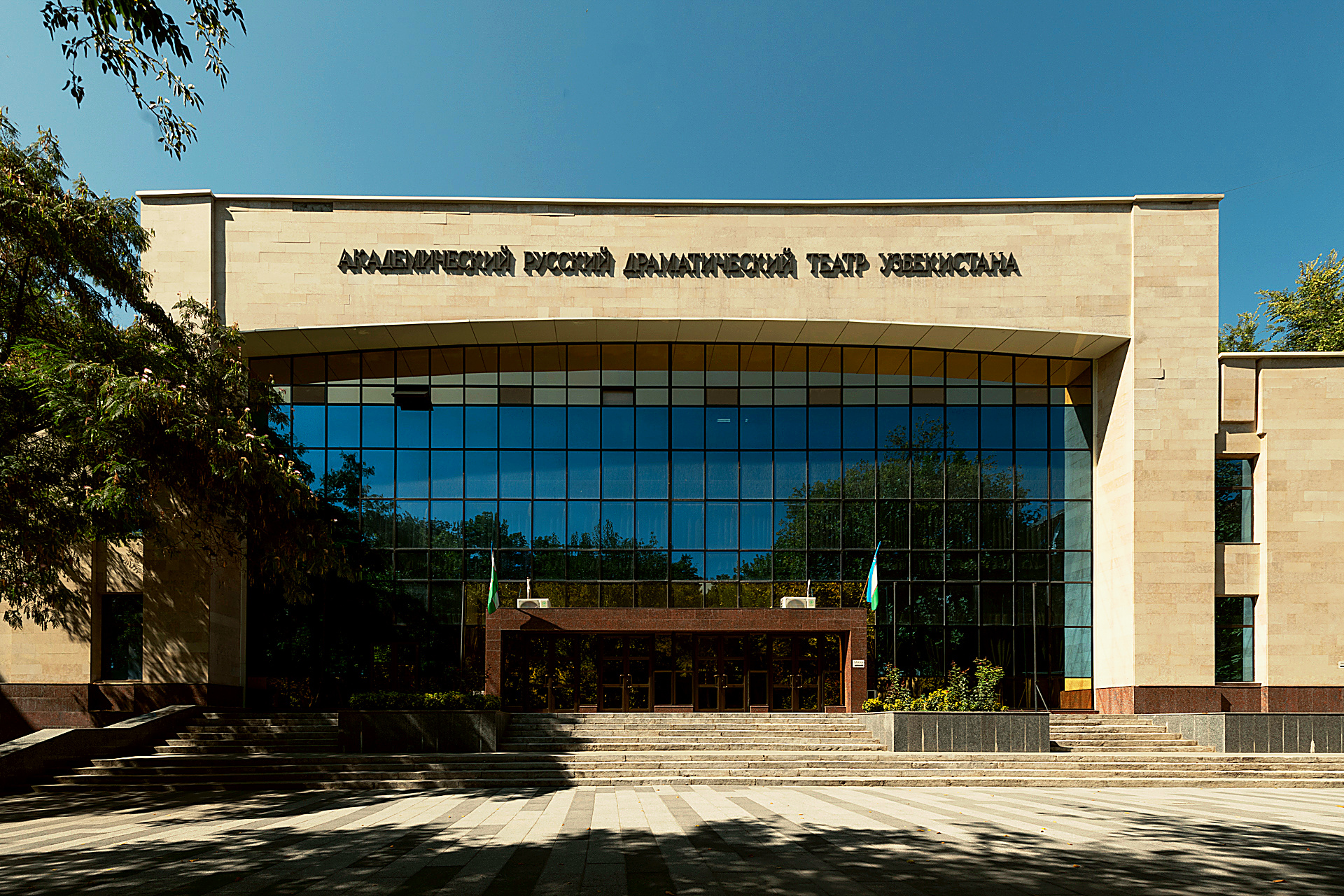
Russian Drama Theater of Uzbekistan
ARCHIVE PHOTOS
Established in 1947 as the All-Union Society for the Dissemination of Political and Scientific Knowledge, Znaniye (“Knowledge”) Society evolved into a political and educational appendage that supplemented state propaganda and educational programs. Boasting a widespread infrastructure across the nation, the society supervised an array of institutions, encompassing museums, exhibition spaces, planetariums, “houses of scientific and technical propaganda,” “houses of scientific atheism,” and lecture halls.
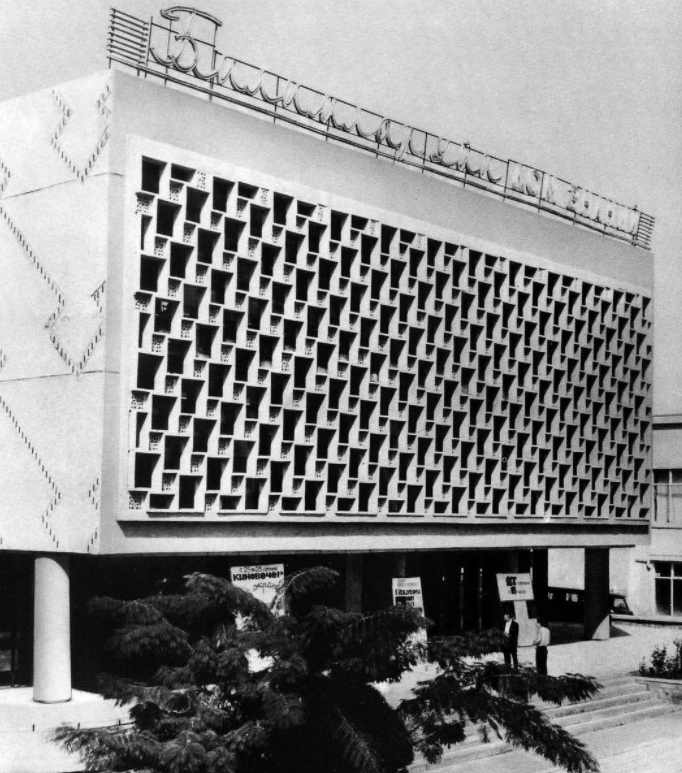
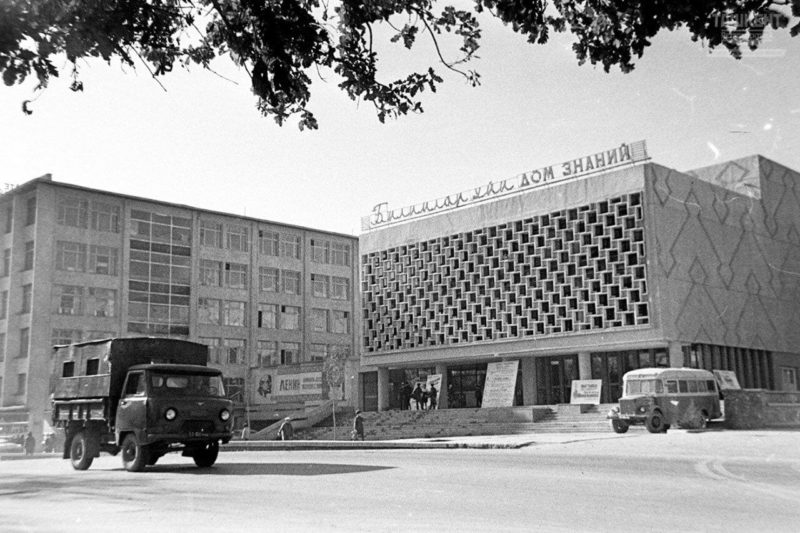
Designed by architects Irina Demchinskaya (the lead architect), Yuri Miroshnichenko, and Svetlana Shuvaeva, the Tashkent House of Knowledge was erected in 1968. Despite its relatively modest land footprint of just 24 x 42 meters, this four-story edifice was ingeniously planned. The semi-basement accommodated a print shop, dispatch center, artist’s workshop, a cloakroom for 900 visitors, a designated smoking room, and a buffet seating 60. The ground floor housed a welcoming vestibule, a compact lecture hall with a 100-seat capacity and its own foyer, a library complete with a 20-seat reading room and storage for up to 30,000 volumes, as well as administrative offices. The second floor was home to a grand foyer and an expansive lecture hall, equipped to accommodate 850 attendees for an array of events including lectures, concerts, and film screenings. The third floor featured a spacious exhibition hall measuring 24 x 10 meters.
One of the building’s most striking features was its sun-shading lattice, which infused the facade with Central Asian architectural flair.
The interior spaces were decorated with grandiose mosaics crafted by Russian artists Leonid Polischuk and Svetlana Shcherbinina. These were showcased on the walls of a three-level atrium and depicted a “pantheon” of significant Central Asian figures and artifacts—a theme that would be continuously elaborated upon by Uzbek artists from the 1970s through the 2000s.
In sharp contrast to the largely underutilized Palace of Friendship of Peoples—which reportedly drained the state coffers at a rate rumored to be 200 times greater—the House of Knowledge stood as a paragon of architectural efficacy.
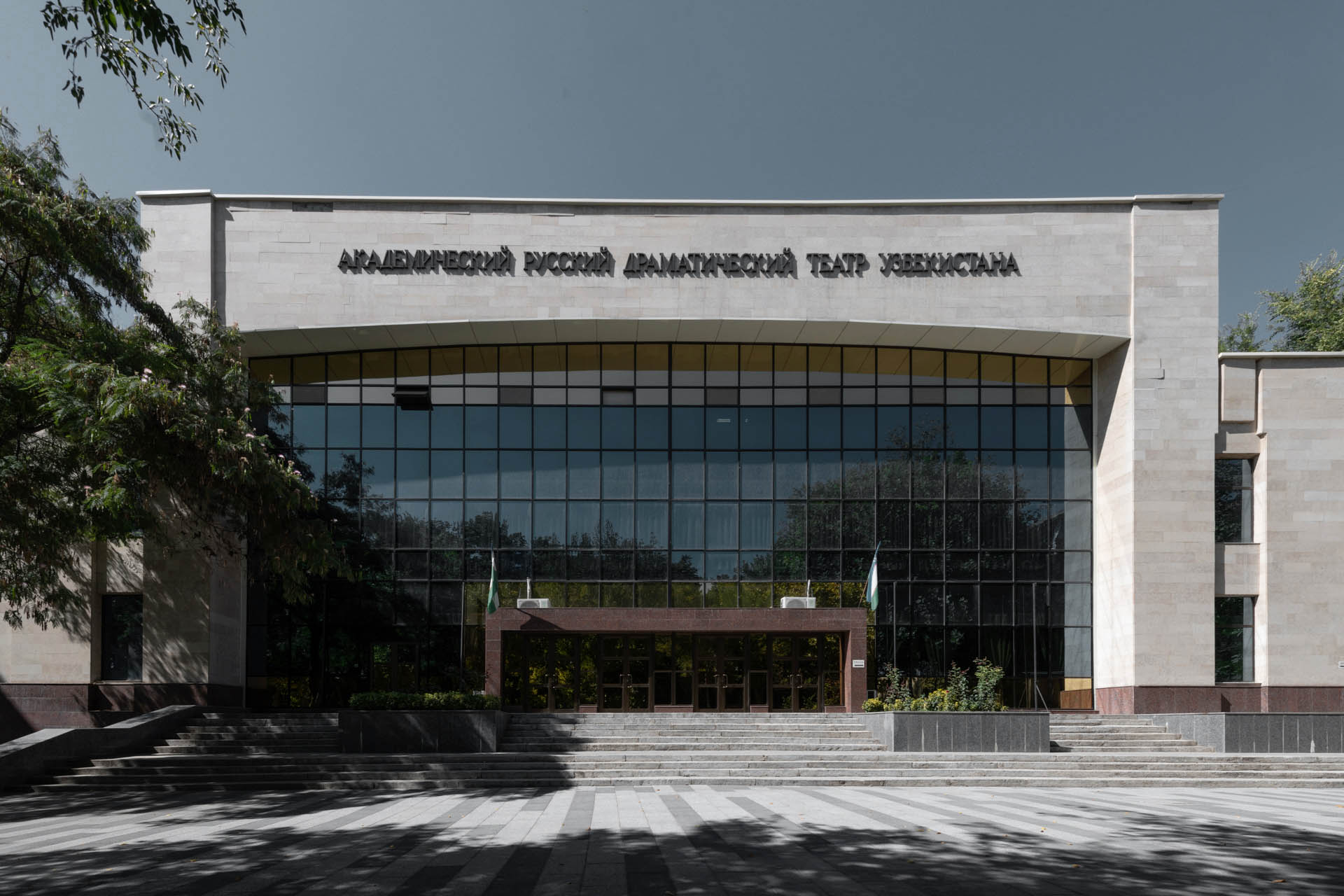
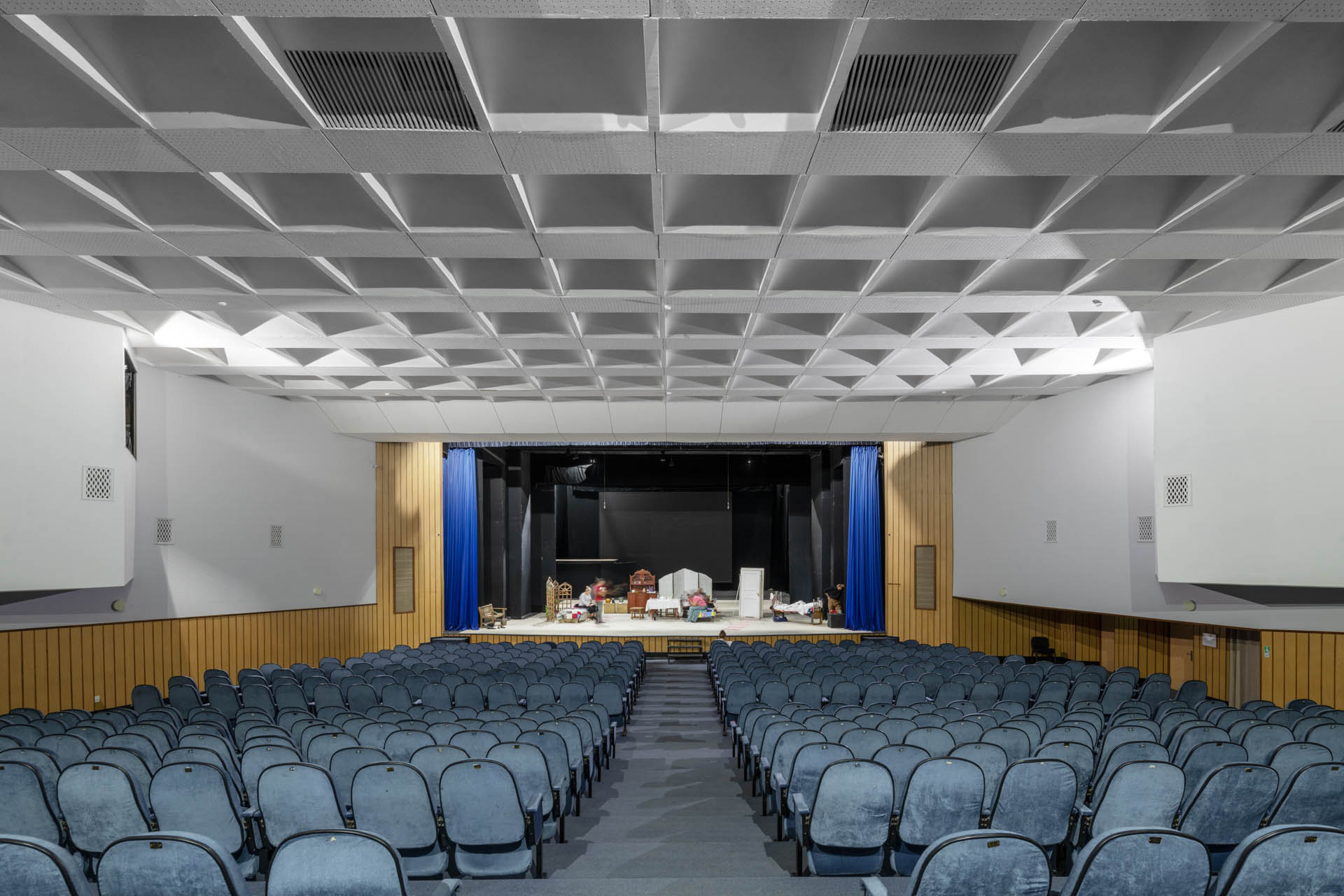
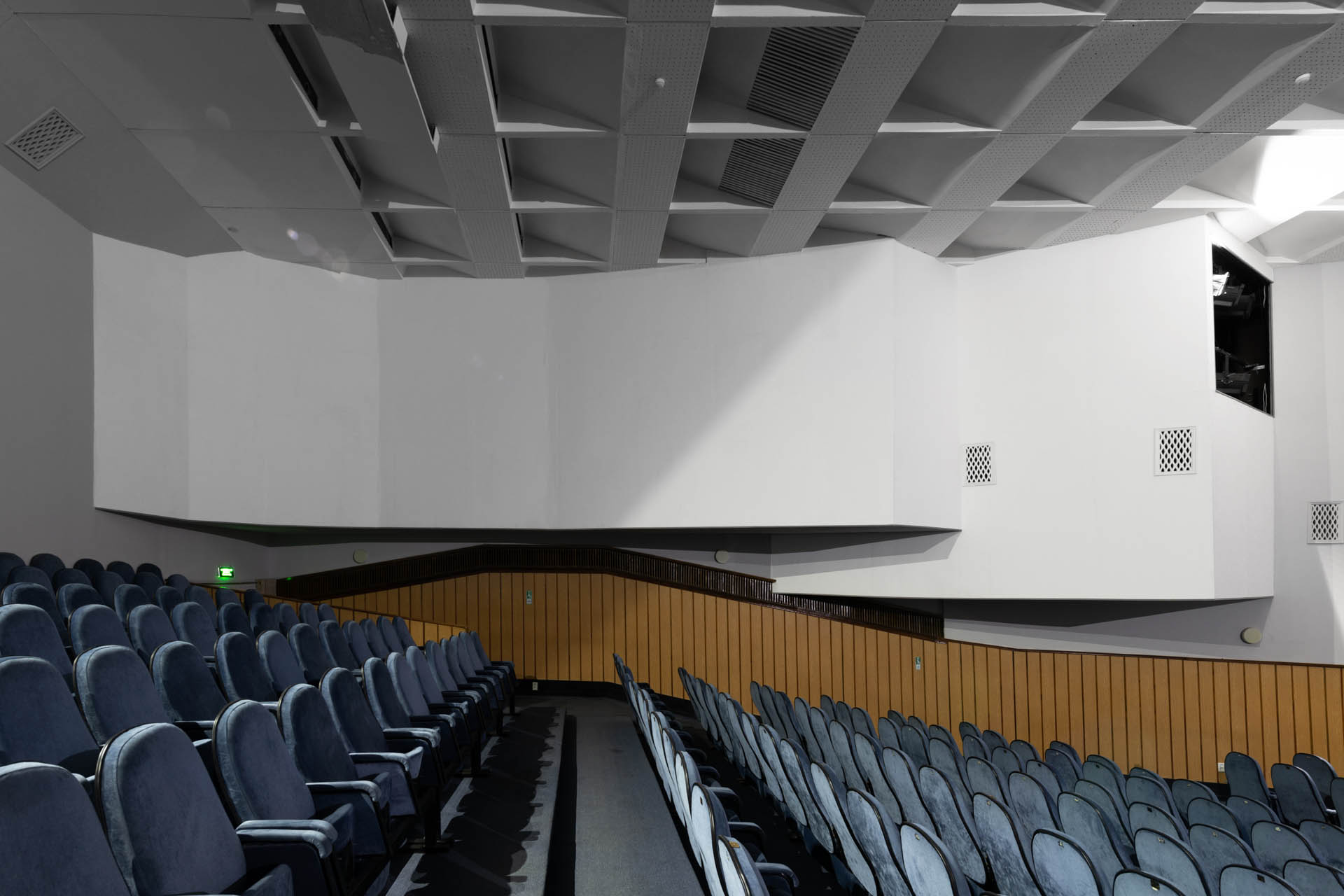
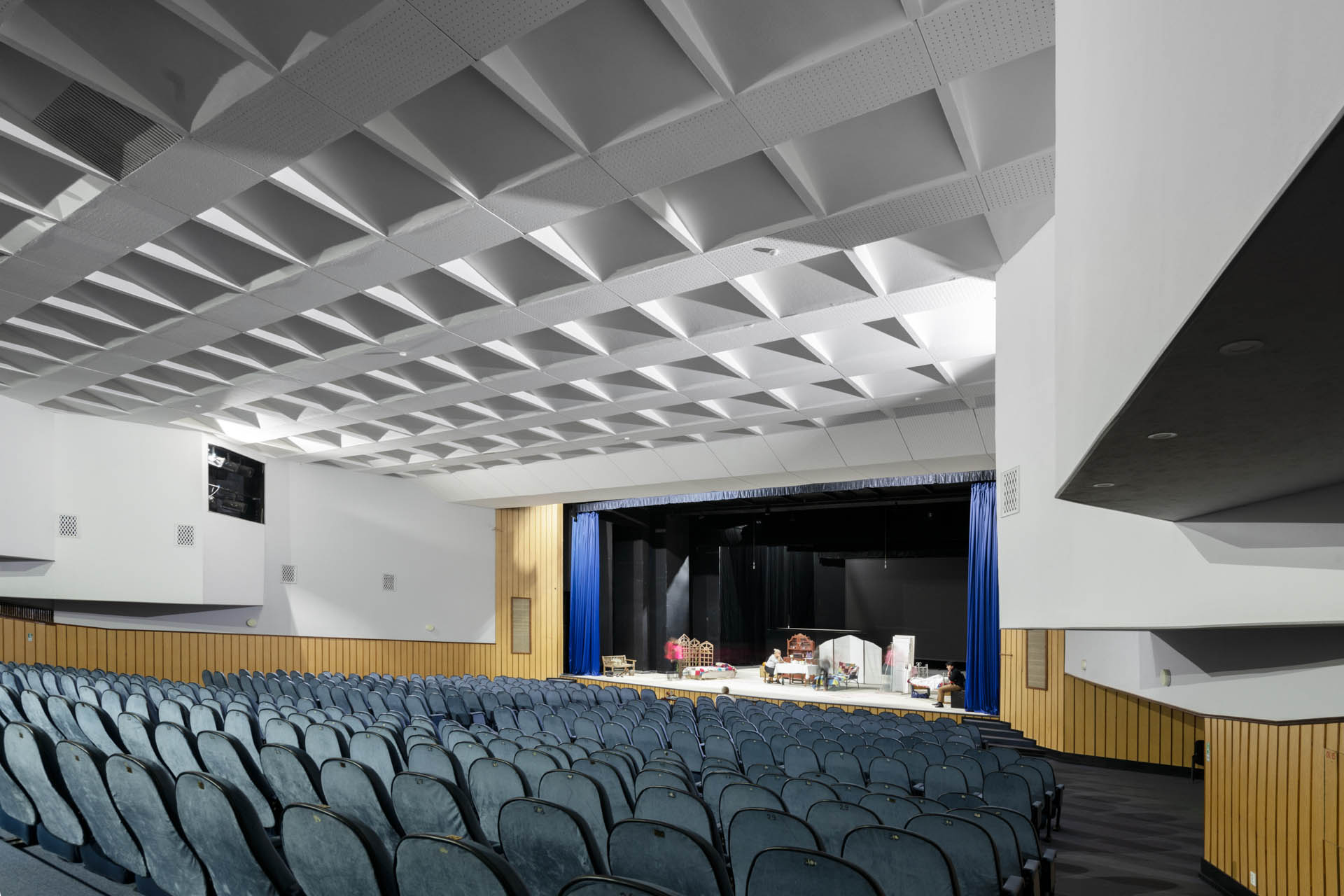
When plans for a new edifice for the Academic Russian Drama Theater eventually morphed into the construction of the Turkestan cinema and concert complex, the state decided to repurpose the House of Knowledge to meet the theater’s needs. In 2001, the building underwent a total renovation, irrevocably erasing its original facade and interiors, including the intricate mosaics. Today, this once-celebrated monument of Tashkent’s 1960s architecture can be considered irrevocably lost.
This text was adapted from the research compiled by the international observatory Alerte Héritage, as part of the “Architecture of Uzbekistan: The Black and Red Book” project.
Modern Photos