
Tashkent Department Store
ARCHIVE PHOTOS
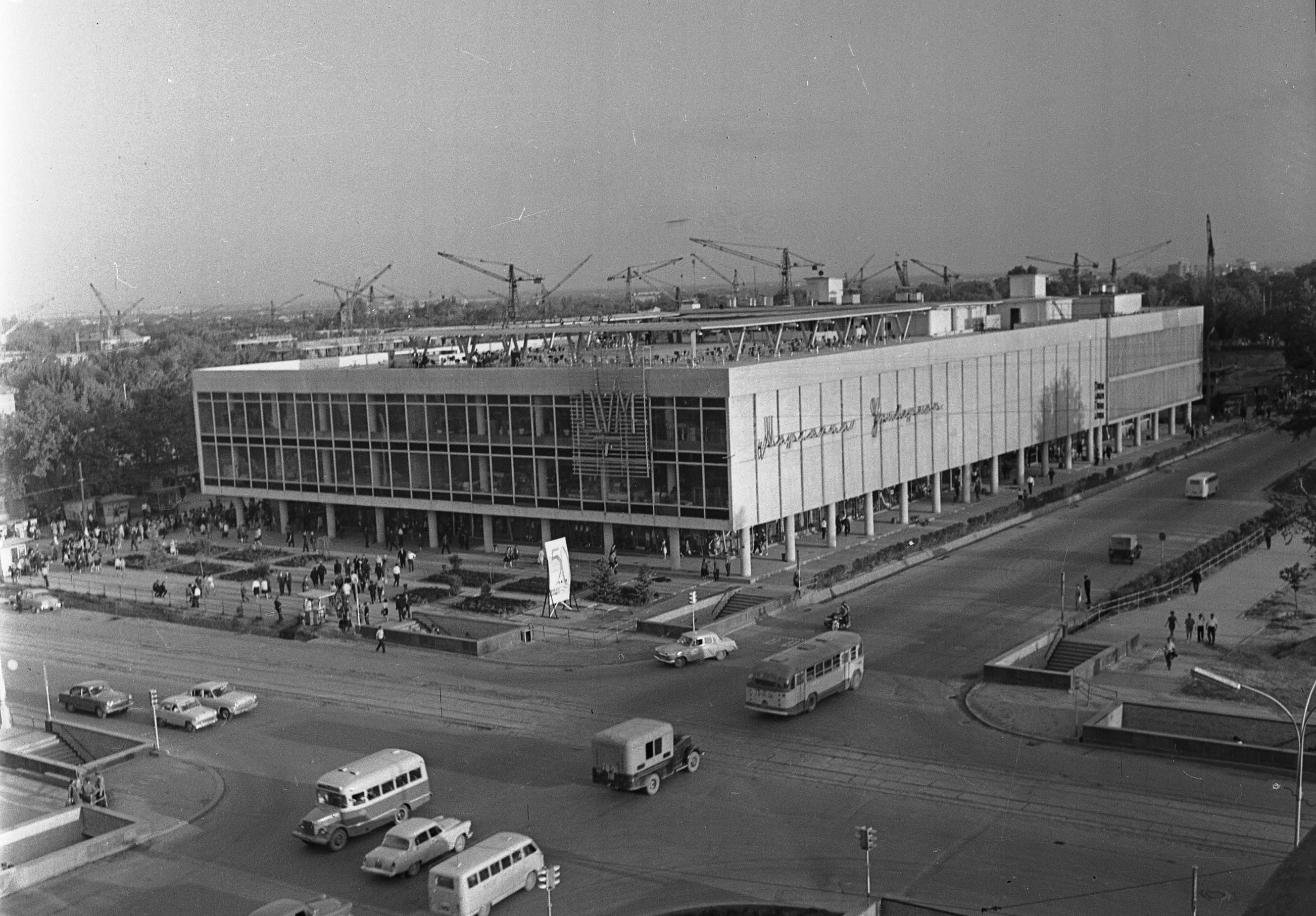
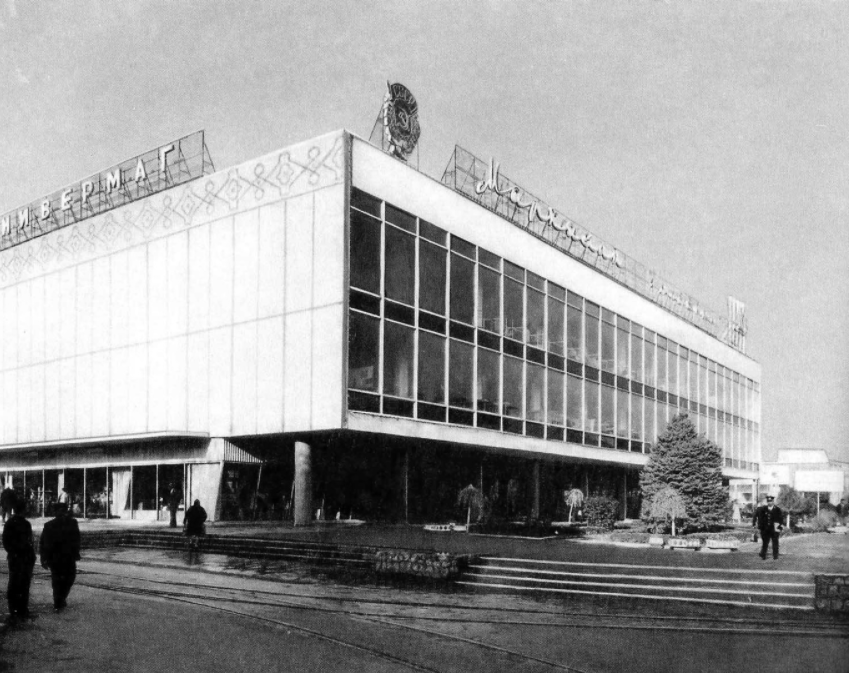
Beginning in the early 1960s, inspired by Western supermarket concepts and following trade reform, the USSR witnessed the construction of numerous new retail spaces. Moving away from the rigid designs of the post-Stalinist era, these shopping centers embraced the sleek features of modernist architecture.
Unveiled in 1964, TSUM (abbreviation for “Central Department Store”) in Tashkent epitomized the fresh ideals of the time. Drawing from Le Corbusier’s visionary principles, architects Leonid Blat, Leonid Komissar, and Alexander Freytag conceptualized column-supported promenades and versatile flat-roof designs. The structure also bore the imprints of Soviet retail architecture from the 1920s, notably the Mostorg department store in Moscow, crafted by the Vesnin brothers in 1928. Like Mostorg, TSUM showcased an open interior layout complemented by a transparent façade.
During the 1960s, TSUM acted as an experimental stage for nascent retail technologies. It boasted the city’s first escalators, disseminated advertisements through radio ads, and offered unobstructed access to goods in its open-sales halls. The store’s amenities were manifold, including a customer service desk, an order placement service, a packaging section, a showroom with a display podium, a 200-seat cafeteria, and a rooftop café. By 1967, the workforce of this retail behemoth had swelled to approximately 1,100 individuals.
The interior of TSUM was decorated with two ceramic panels—Youth by T. Shamirzaev and Song by D. Yusupov. The ground-floor glass display windows, designed to attract street-level attention, were another focal point.
In the quest for “ethnic” architecture during the early 1980s, TSUM and other pioneering modernist buildings in Tashkent underwent extensive aesthetic makeovers with a heavy use of traditional craftsmanship. Traditional plaster ornamentation was liberally applied to available surfaces and structural elements.
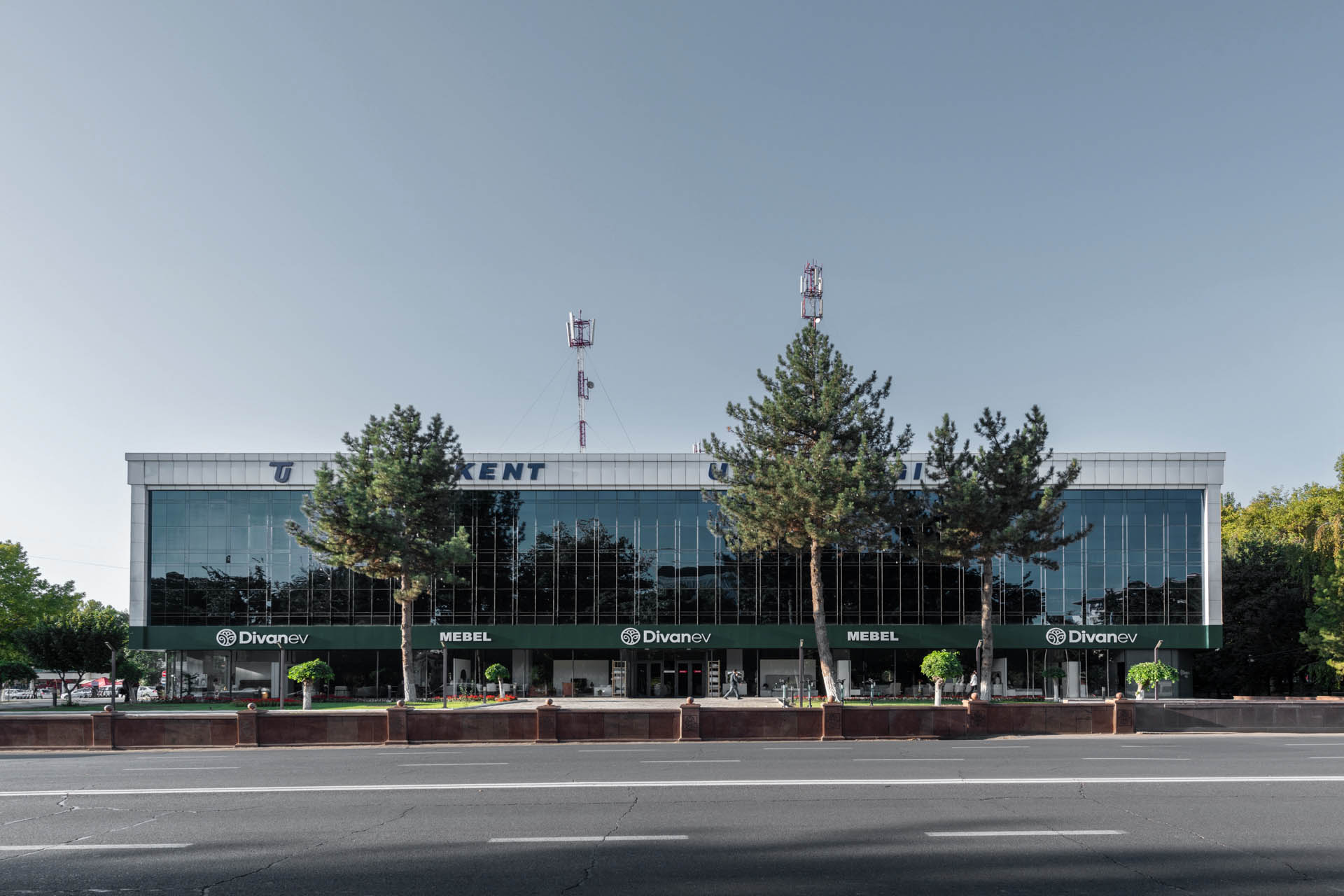
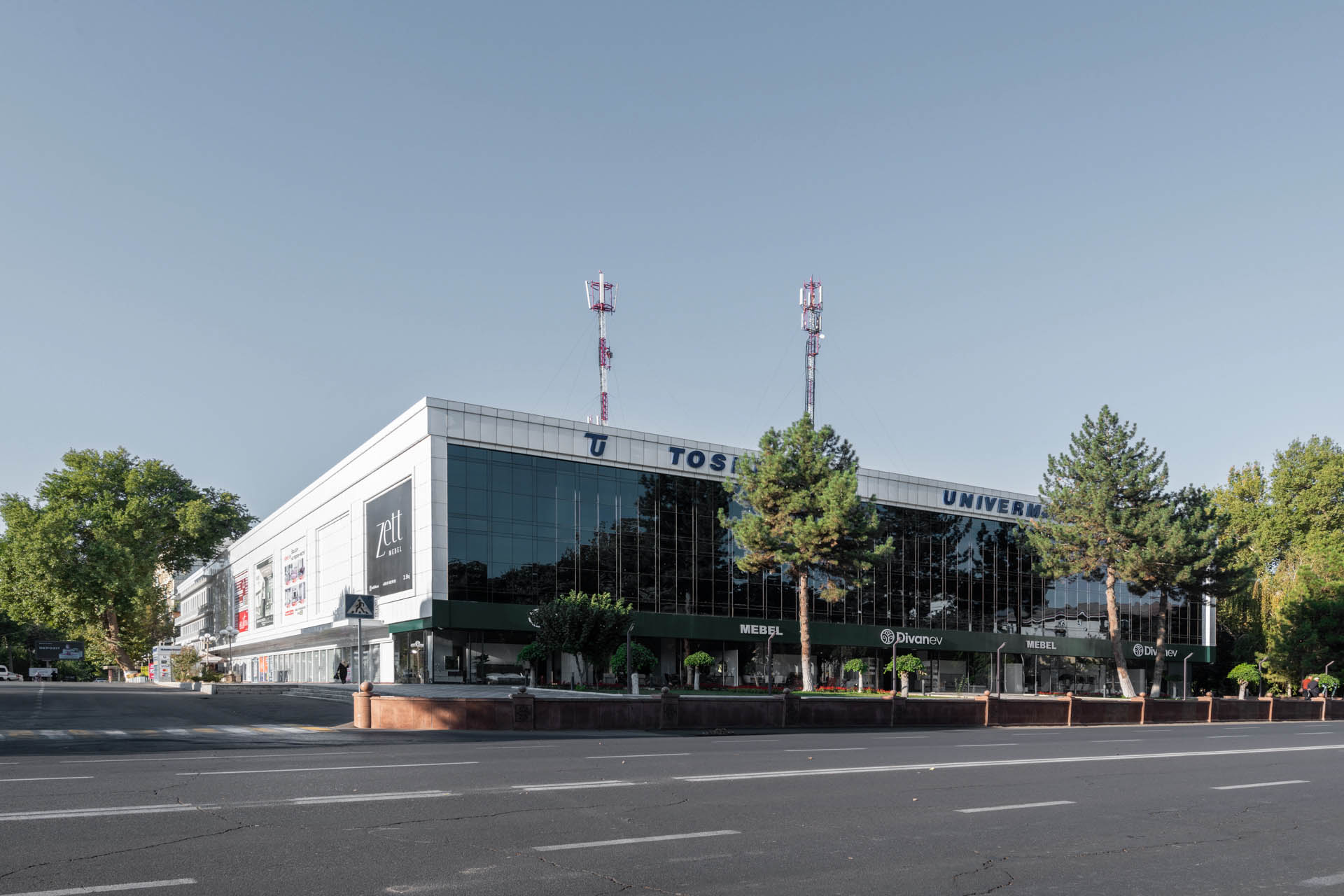
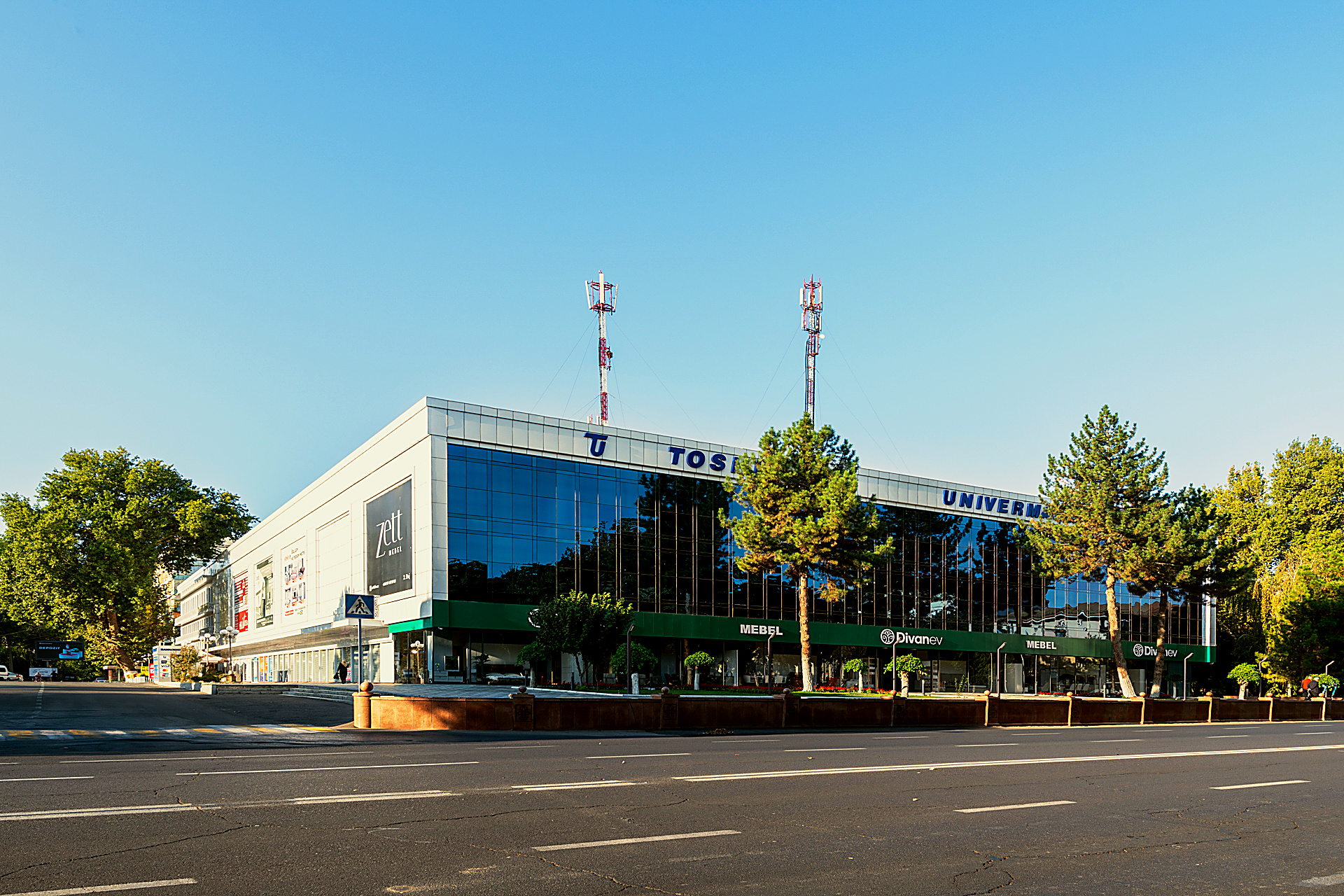
In subsequent decades, specifically the 1990s and 2000s, the building experienced further metamorphoses. Its façades were clad in aluminum composite panels and tinted glass. However, these transformations were not irreversible: if desired, the original cladding and glazing could be restored. Many original elements have been preserved in the store’s interiors, such as the stairs, floors, and vertical railings.
Modern Photos