
Uzbekistan Hotel
ARCHIVE PHOTOS
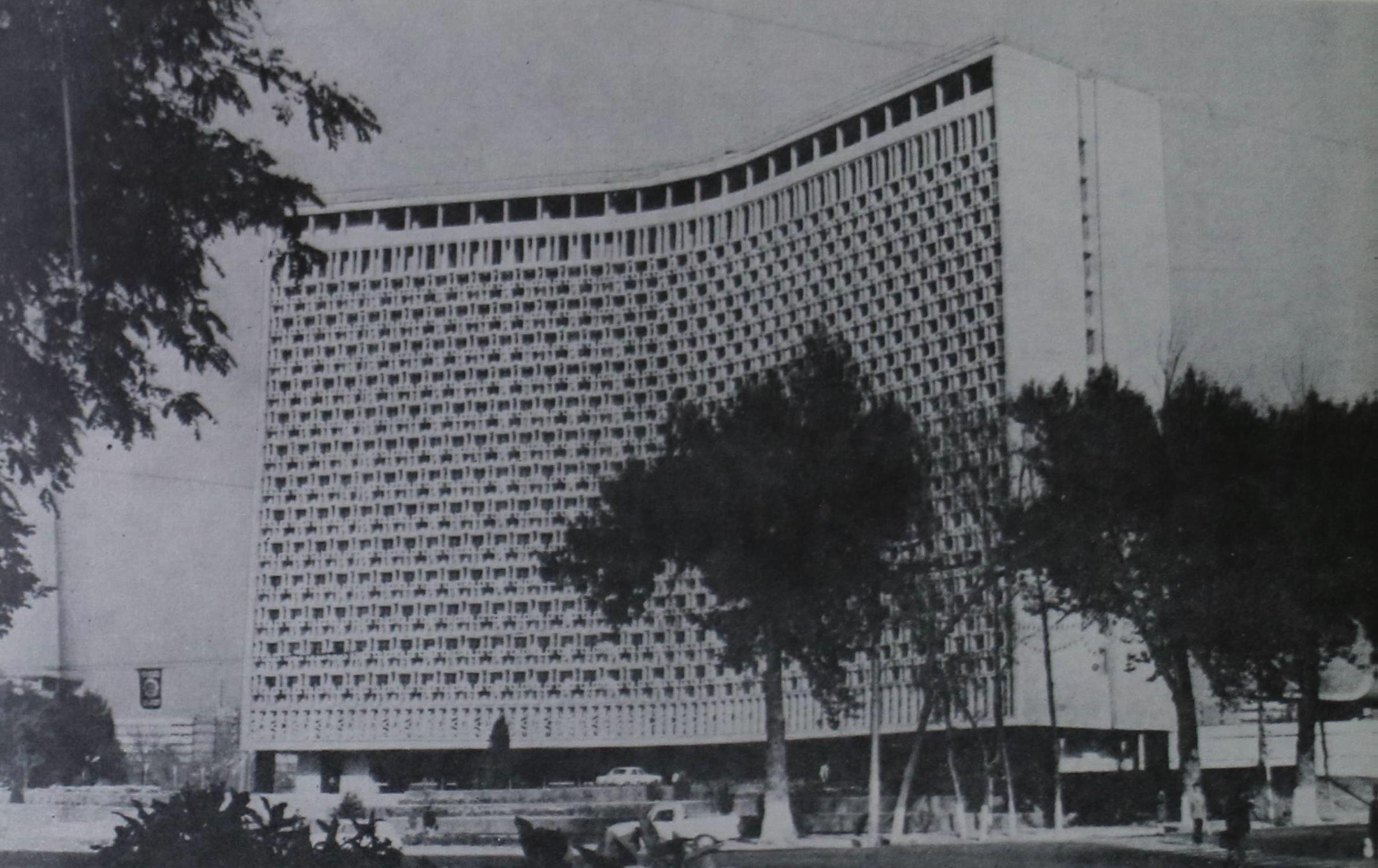
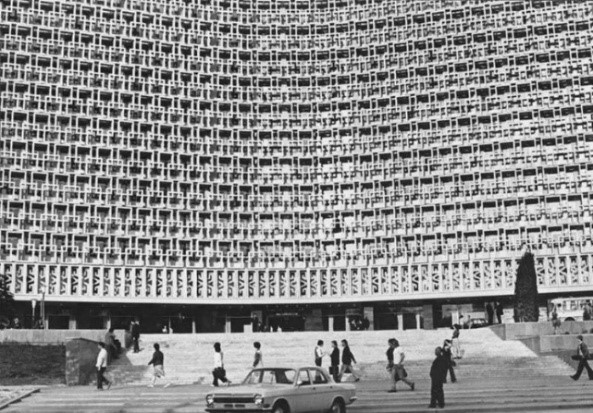
Tashkent’s hotel industry always mirrored the city’s shifting role on both the Soviet and global stages. Throughout the 1950s and 1960s, following Stalin’s death, the Soviet Union began to open its doors to foreign tourism. Tashkent became a magnet for delegations from newly independent nations, eager to witness the “Soviet East” firsthand. By 1963, existing accommodations could no longer meet the growing demand, prompting architects to begin the design of a new, expansive hotel.
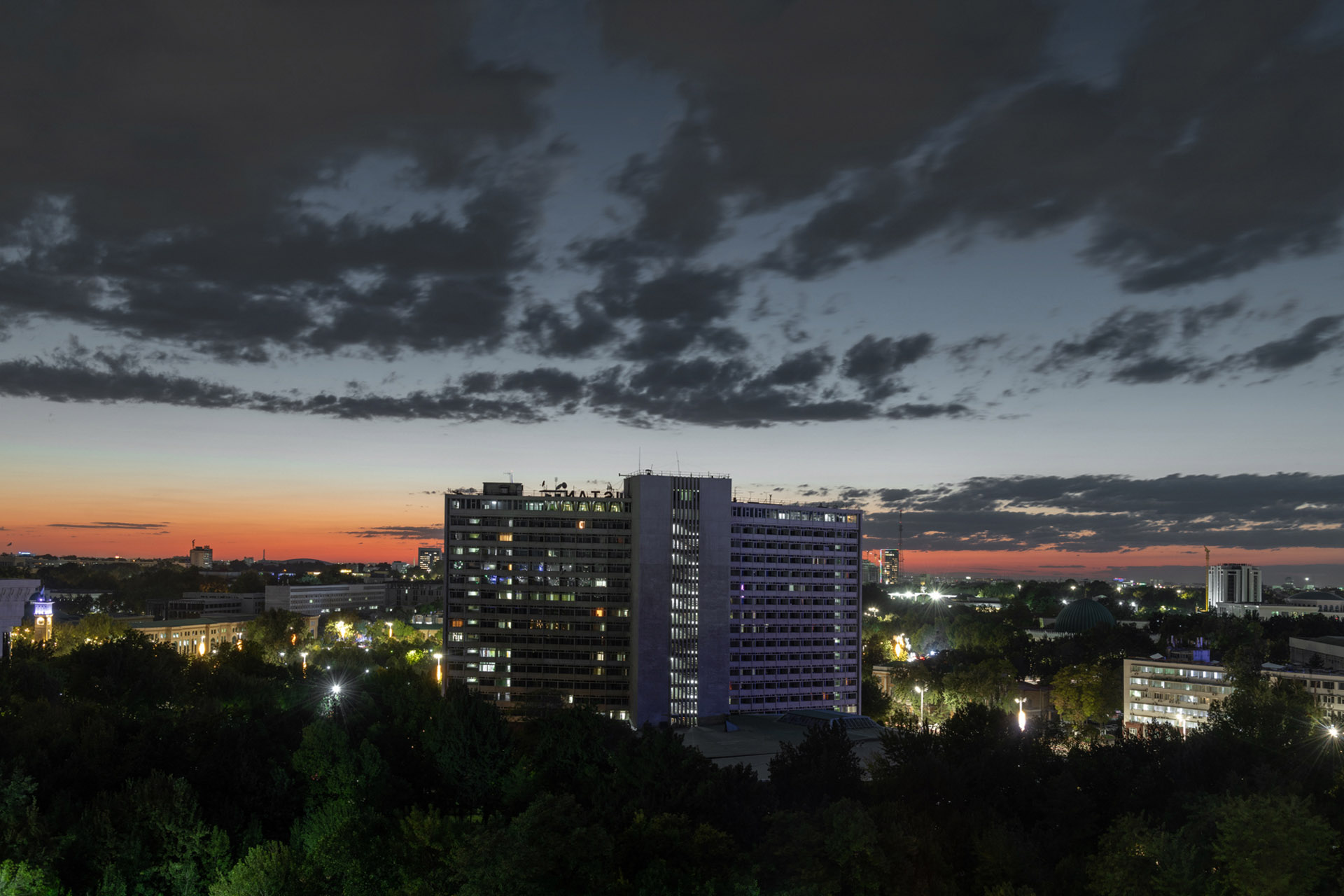
Initial designs called for a towering 20-story structure of reinforced concrete. However, following the earthquake of 1966, a more cautious approach prevailed: the design was scaled back to 17 floors with a focus on sturdier steel construction. The main high-rise was divided into three semi-independent sections, reinforced with anti-seismic features. Attached to this was a two-level annex housing a restaurant, kitchen, utility spaces, and a café. Dominating this lower section was a courtyard, complete with a gallery that served as a summer veranda. A 450-seat restaurant, a 250-seat café, a 40-seat express café, a 100-seat banquet hall, and a bar of equal capacity encircled this courtyard. Overlooking the courtyard’s pools was a traditional Uzbek teahouse.
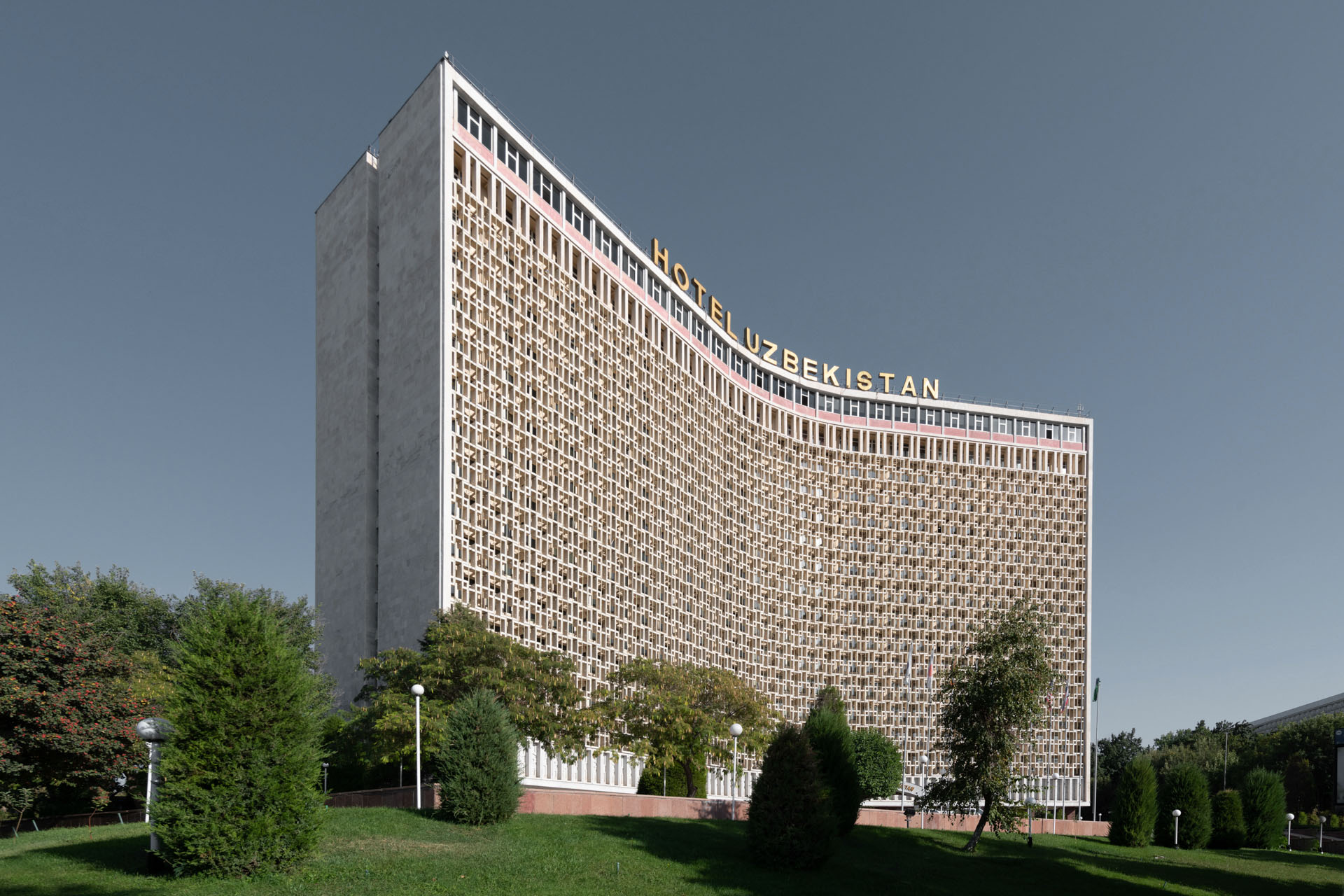
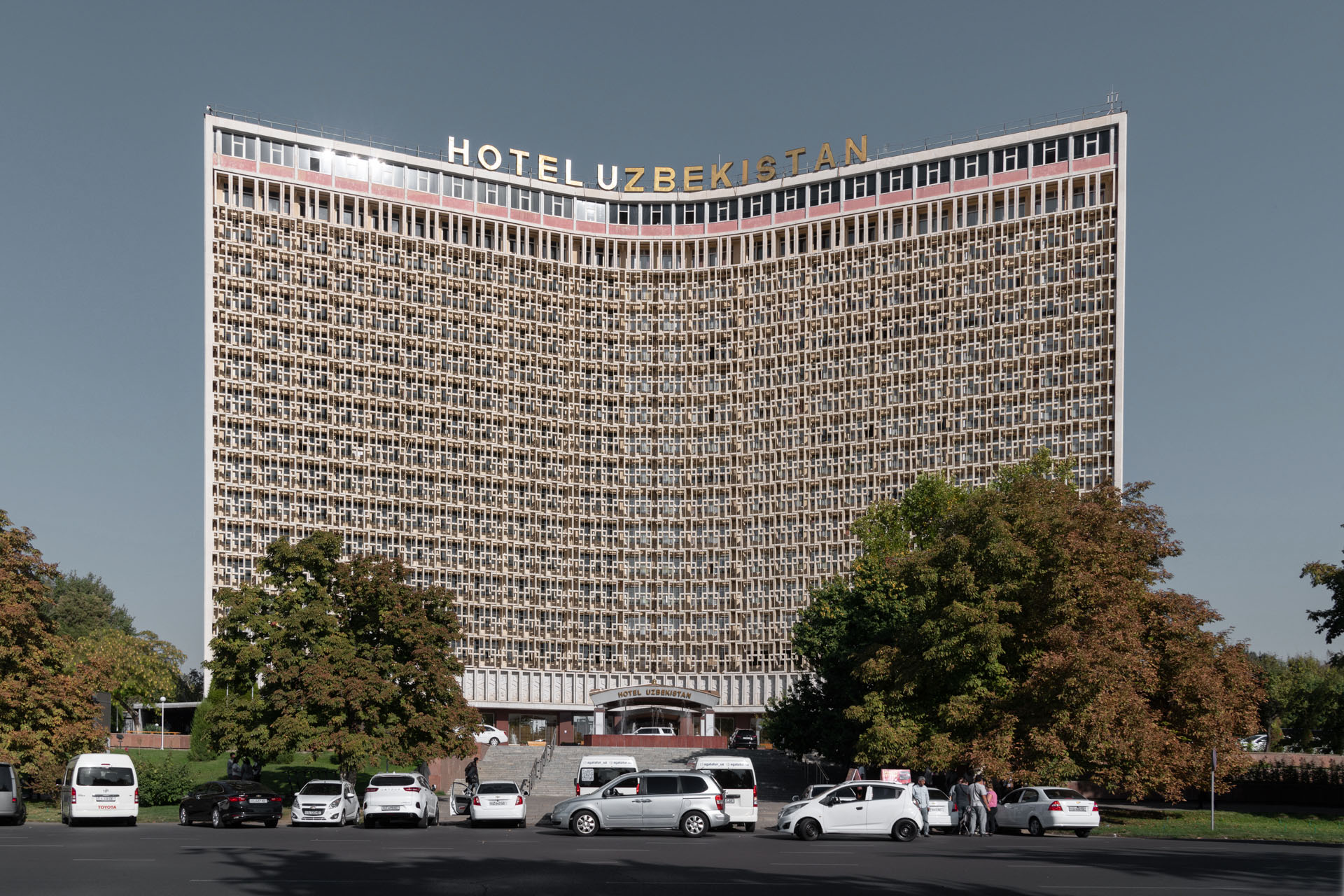
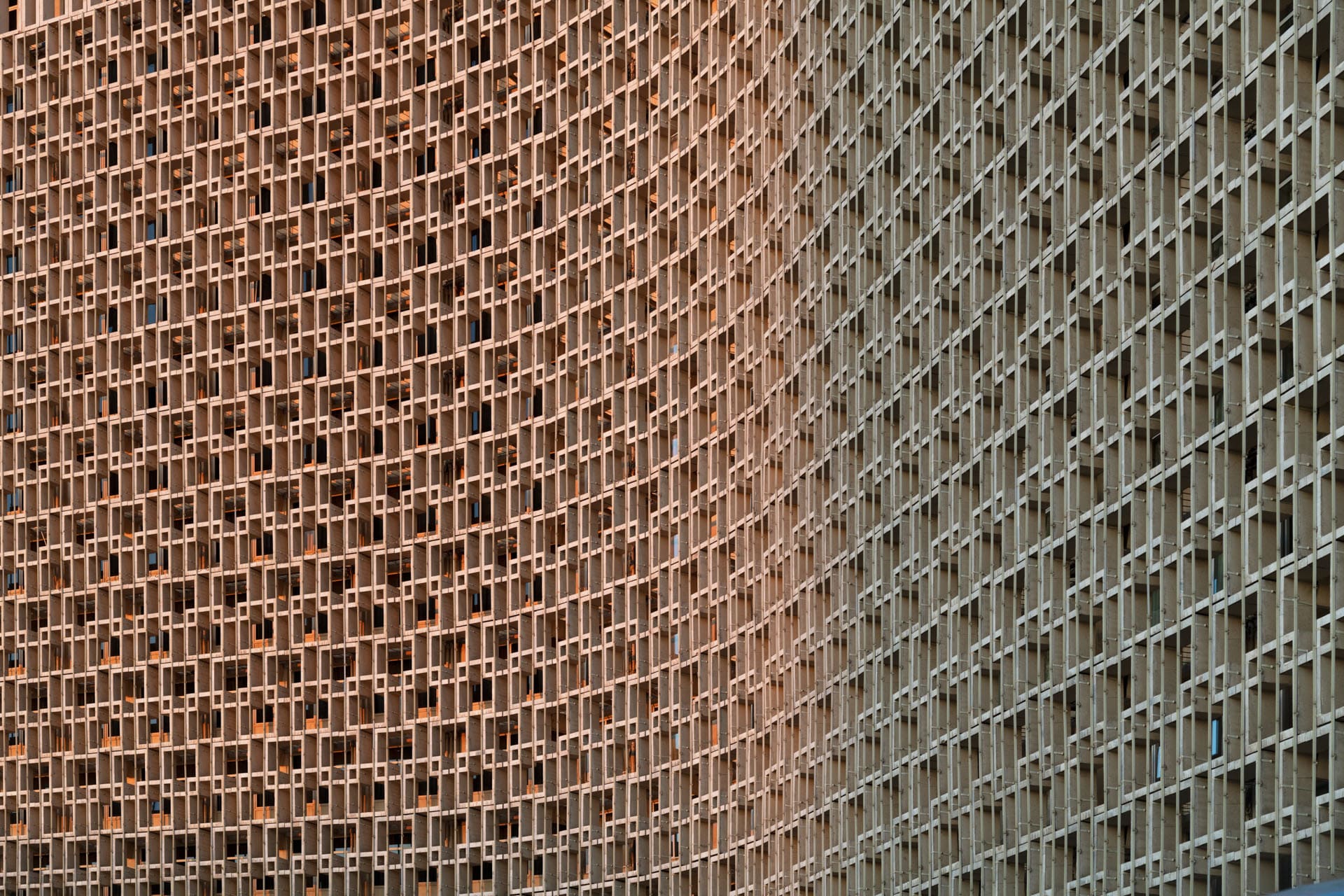
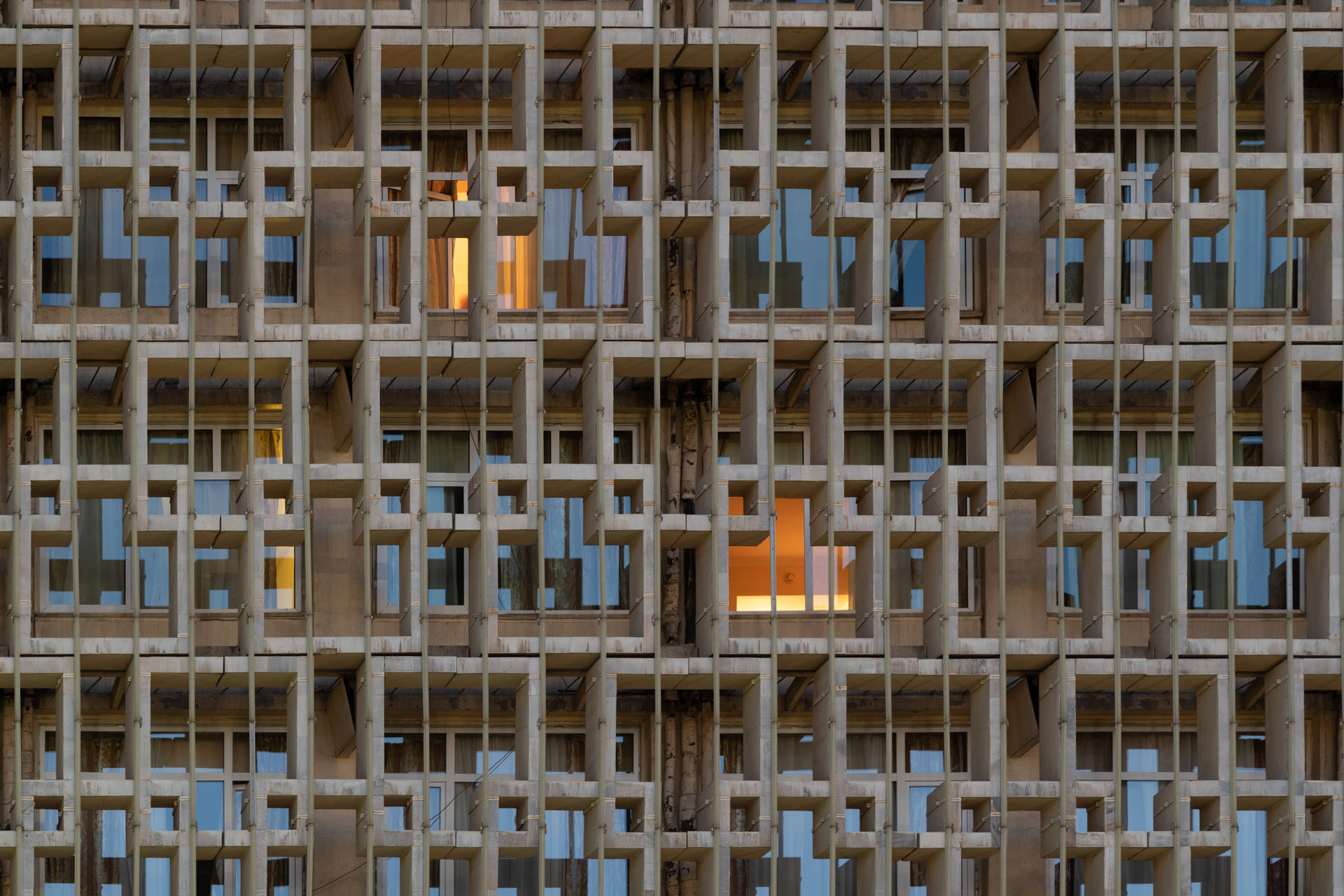
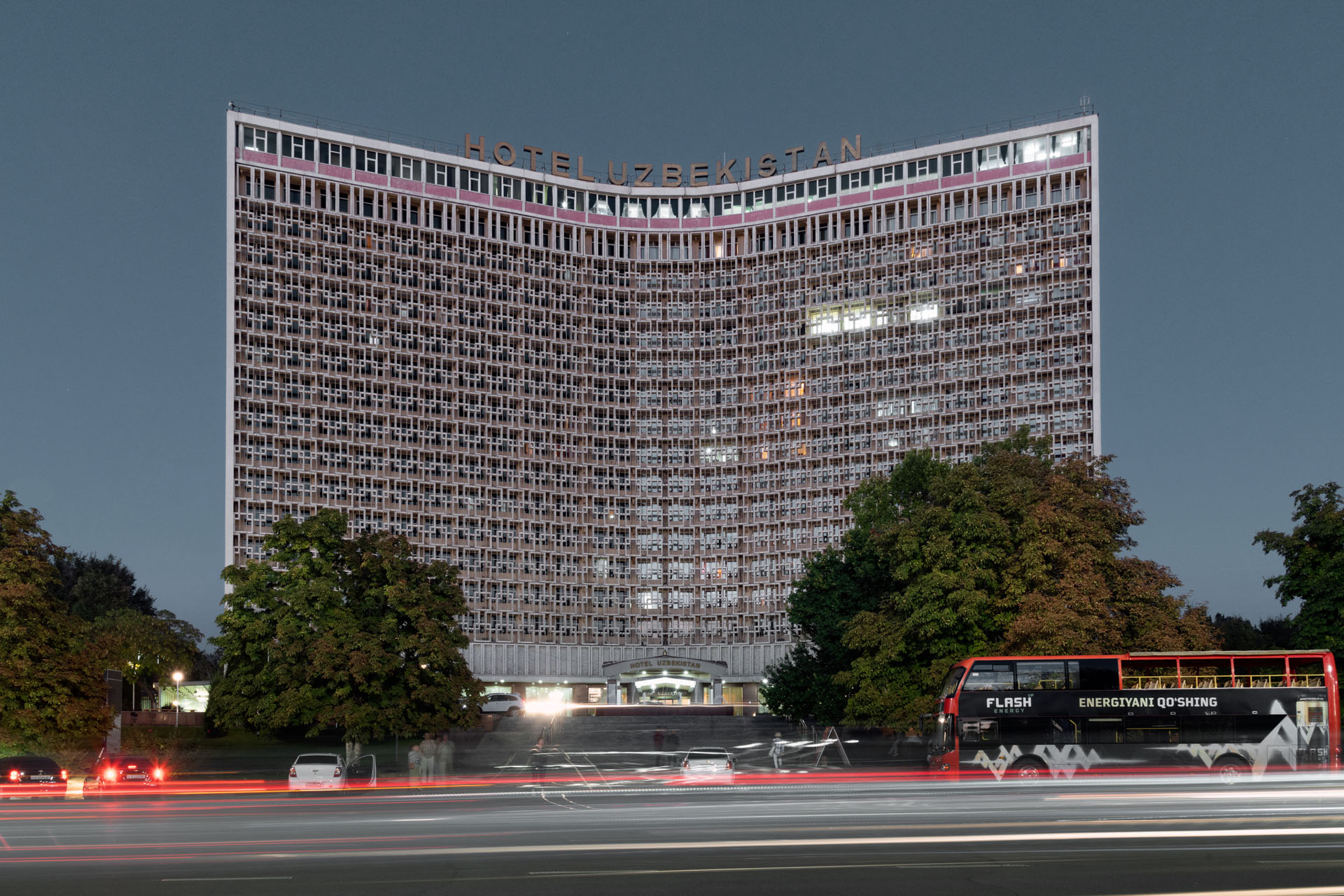
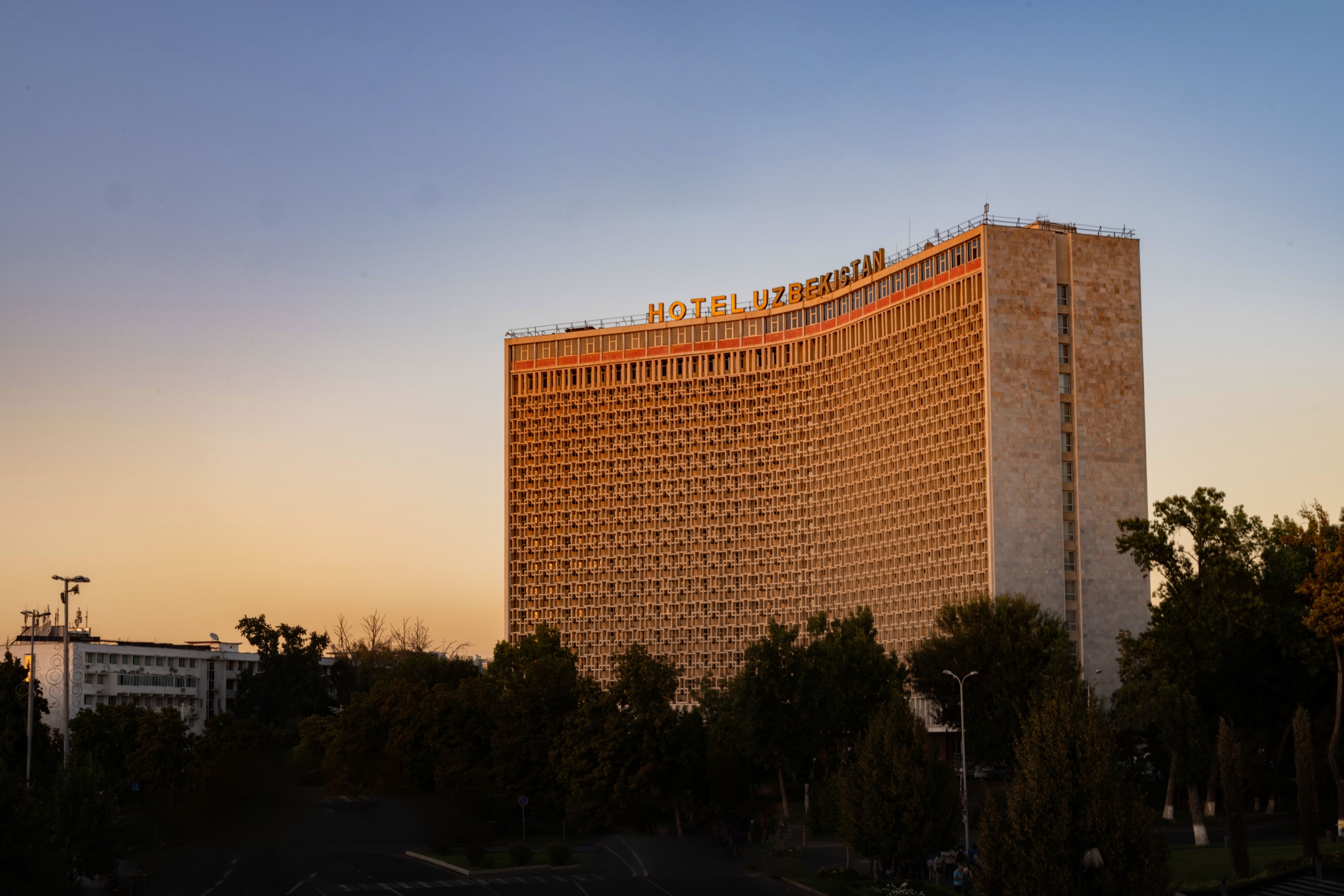
When the hotel opened its doors in 1974, it surpassed initial expectations, offering 930 accommodations instead of the planned 750. A standout architectural feature was its sun-shading concrete lattice, which referenced the traditional Central Asian panjara screen. The two-story complex was also enhanced with the addition of a swimming pool, crowned by a striking canopy.
The hotel’s final construction phase was marked by an enthusiastic embrace of monumental art, spanning a diverse range of techniques and mediums—from frescoes and mosaics to stained glass and intricate ganch (plaster) carvings. Regrettably, many of these artistic treasures were lost during renovations in the 1990s and 2010s.
Uzbekistan Hotel served as the central hub for Intourist, the official Soviet travel agency, accommodating the majority of foreign visitors to Tashkent. The hotel was especially busy during the Tashkent International Film Festival, which drew attendees from Asia, Africa, and Latin America, as well as during other international forums hosted in the Uzbek capital.
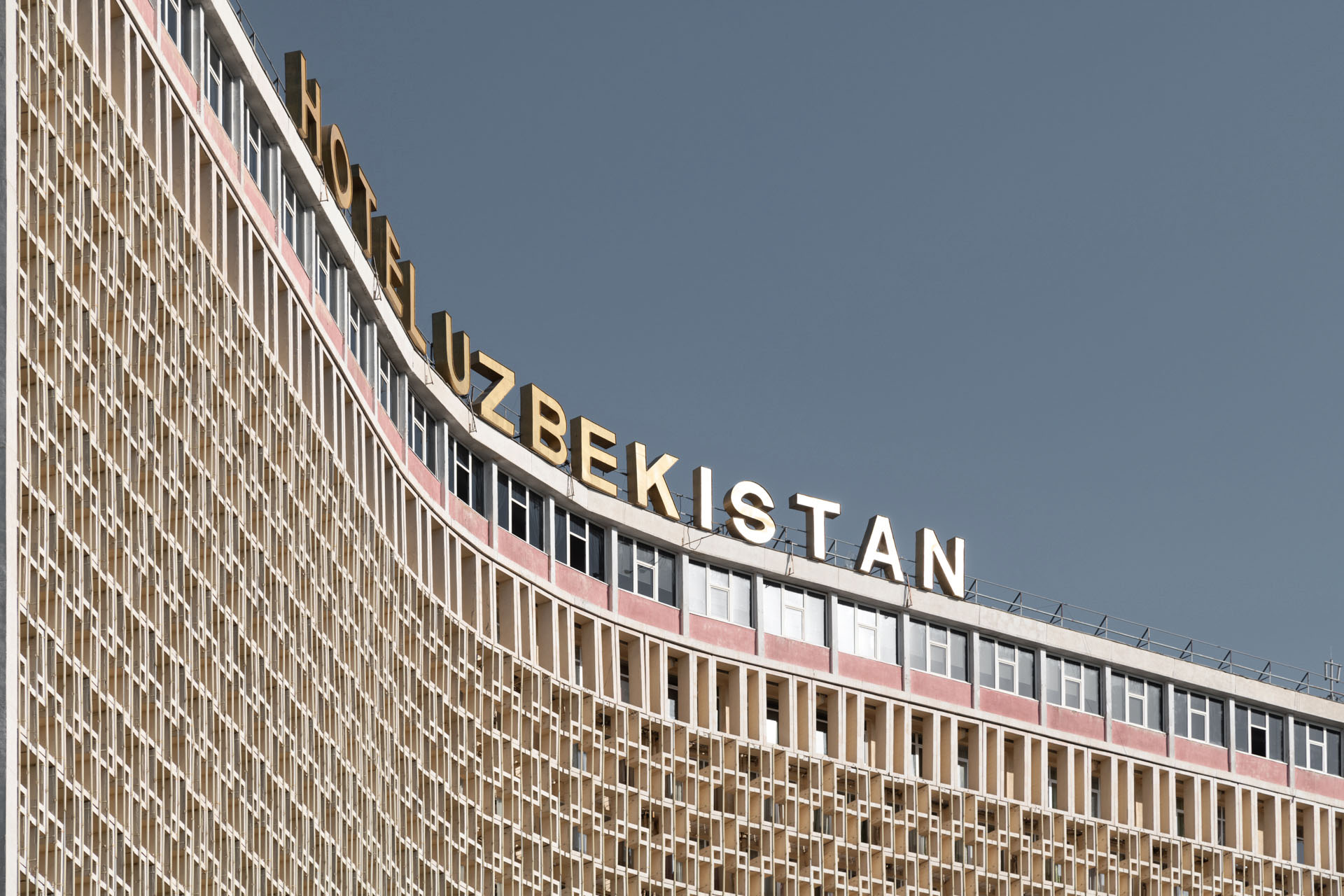
Today, much of the hotel’s original design has been compromised. The pool area has been demolished, and extensive modifications to the two-level food service block have eliminated the inner courtyard. A new entrance area, complete with a dome supported by four columns, has been added to the lobby. Additionally, a new vestibule now partially encloses the space beneath the high-rise section. While most interiors—from the lobby to the restaurant and café—have undergone extensive remodeling in the eclectic styles of the 2000s and 2010s, a few floors still bear traces of the original design. Despite these alterations, the facades of the building have preserved their original appearance, ensuring that Uzbekistan Hotel remains a modernist landmark in Tashkent’s urban landscape.
Modern Photos