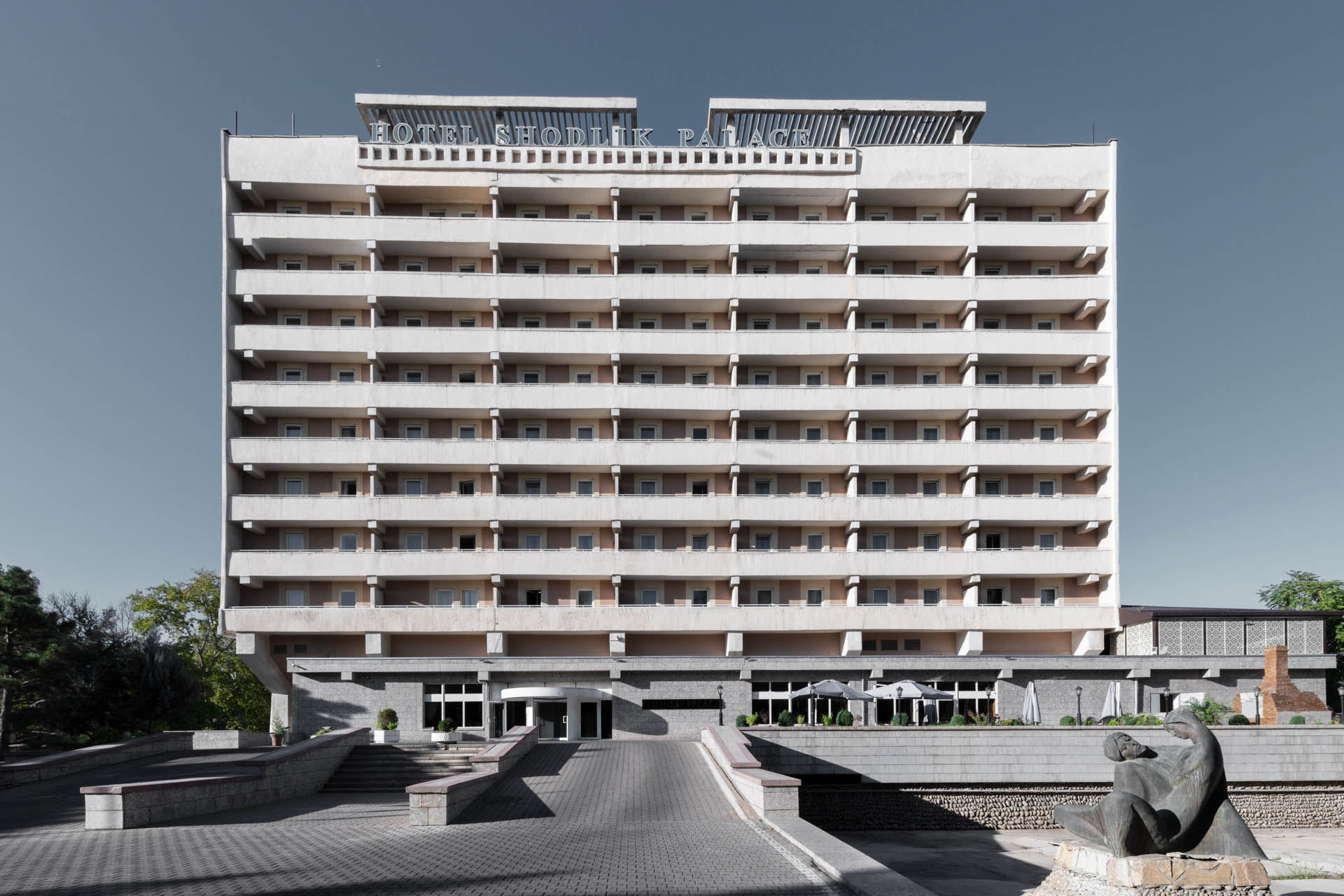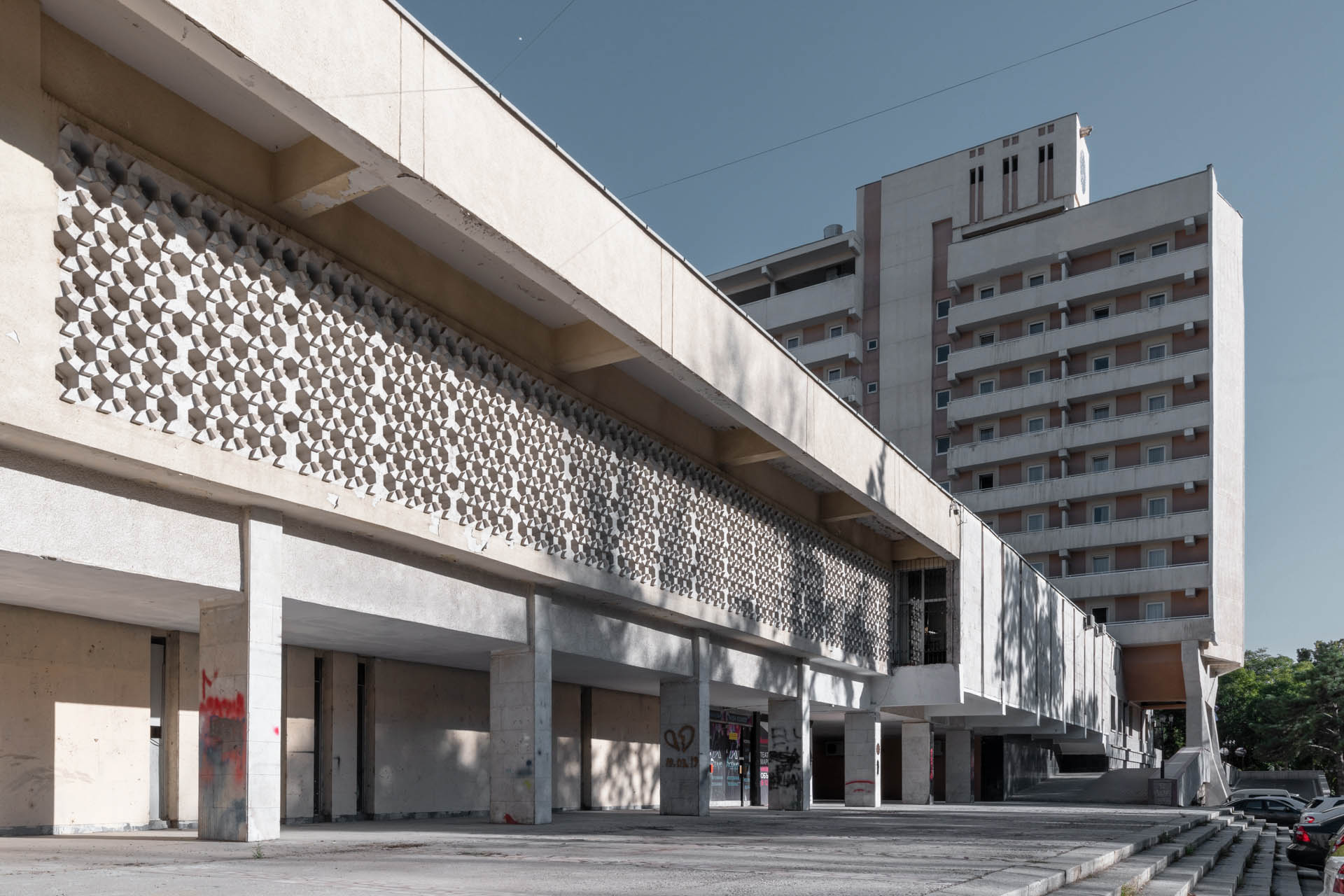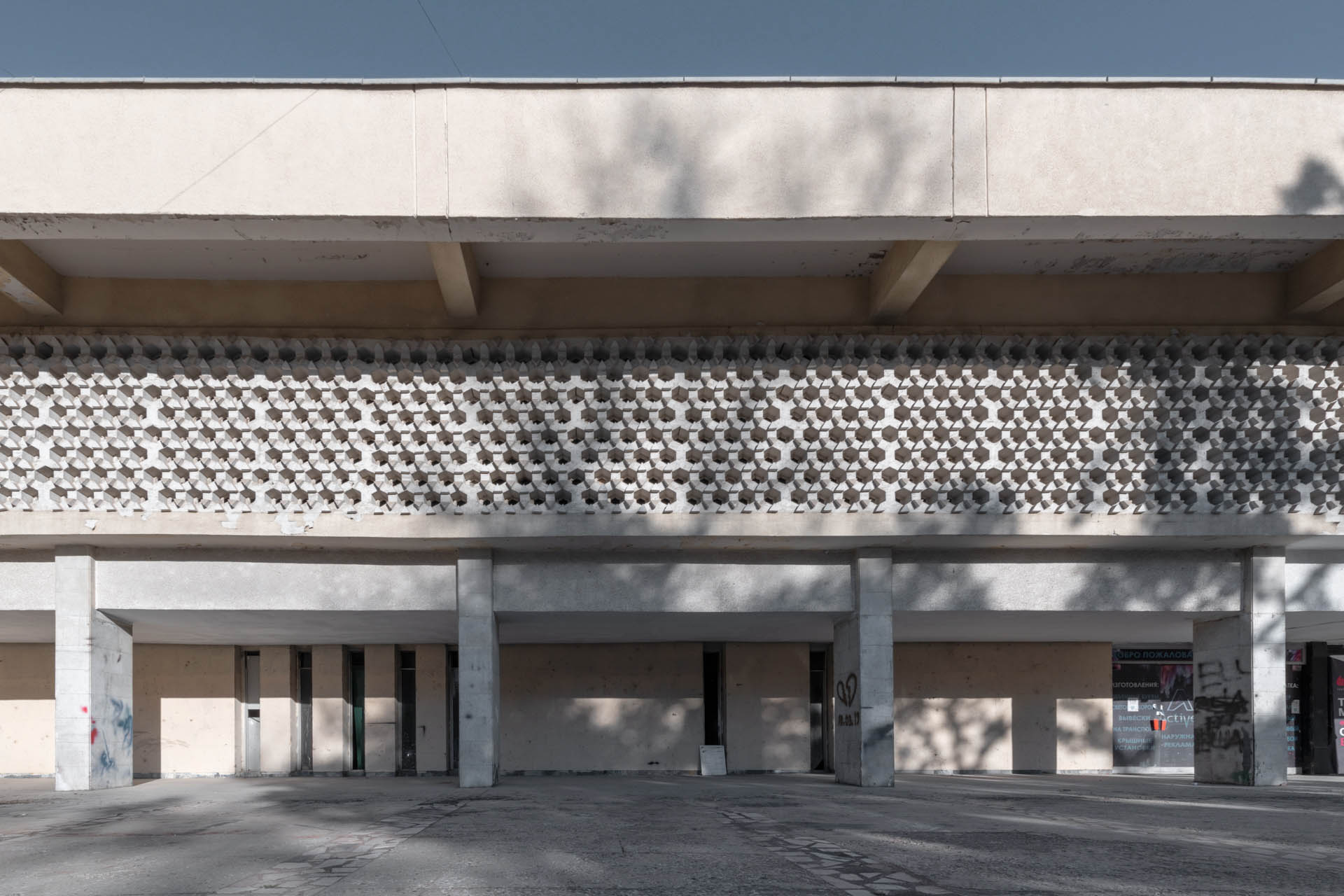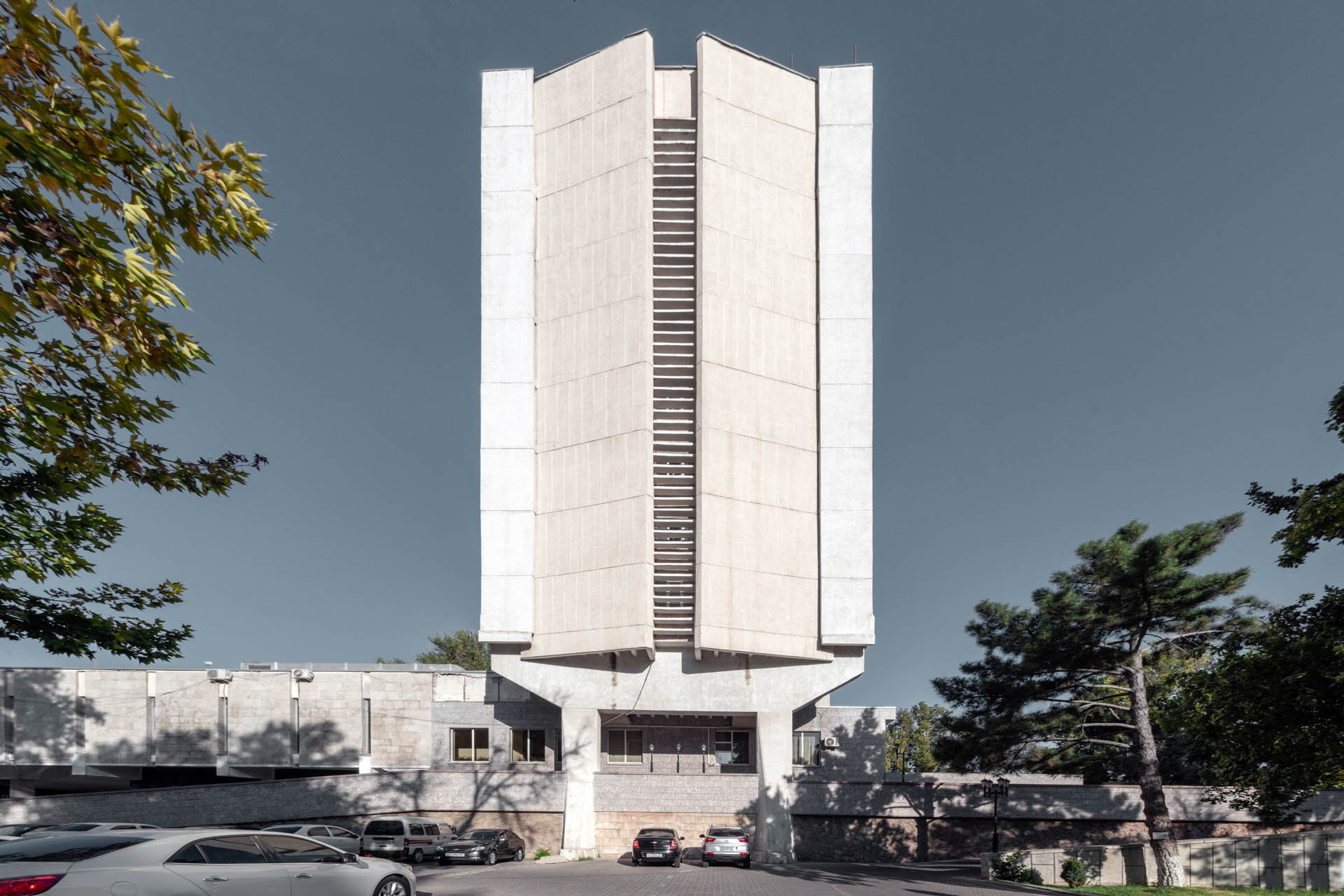


Ilkhom Theater, Shodlik Hotel
ARCHIVE PHOTOS
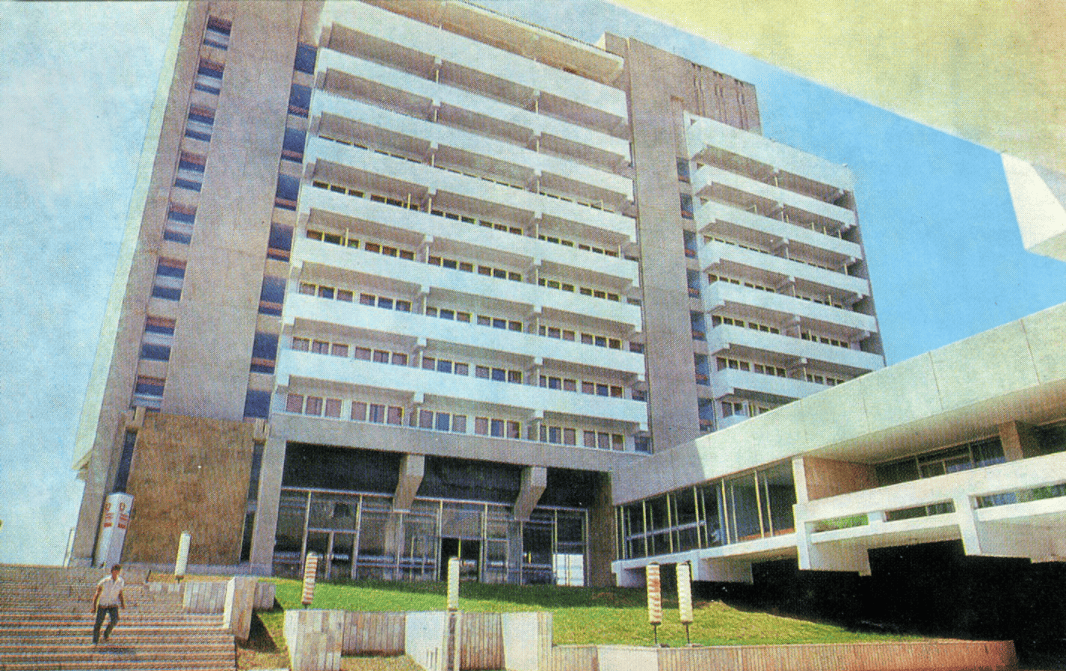
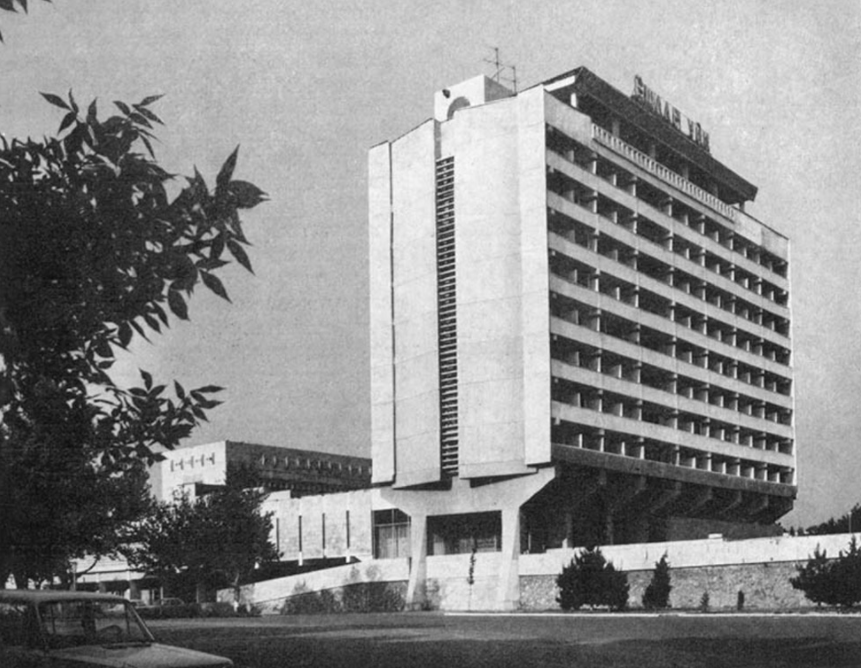
Conceived as a multifunctional hub, the Youth House combined cultural, sports, hospitality, and entertainment elements under one roof. It served as a social hub where Tashkent’s youth could engage in an array of activities, from leisure and creativity to sports and even politics. Moreover, it offered visitors to Uzbekistan’s capital an opportunity to catch a glimpse of the vibrant life of young Tashkent.
Architect Richard Bleze’s original vision featured a 10-story hotel accommodating 344 guests, a youth café-restaurant with 240 seats, a bar with 100 seats, and a tea house for 50. Beyond this, the complex boasted a beauty salon, dance hall, library complete with a reading room and book storage, athletic facilities inclusive of a swimming pool, club rooms for community activities, and even a matrimonial hall.
The Tashkent earthquake of 1966 profoundly influenced all facets of construction in the city. The development of the Youth House unfolded intermittently between 1967 and 1974. Its façade, oriented toward Pakhtakor Street, was simplified to harmonize with the surrounding environment, notably dominated by the Palace of Arts. The building’s visually striking end faces and structural supports imbued it with a unique identity and structural cohesion. Finalized in 1975, the building showcased a diverse array of construction materials in both its exterior and interior finishes, ranging from labradorite and various types of marble to brown tuff and pink shell rock, along with travertine, wood, and aluminum. The banquet hall featured elements of traditional Uzbek decor, including ceramics, majolica, and metal chasing. A sculpture by Yuri Kiselev, titled Meeting, adorned the pool area, capturing a couple seated in traditional Uzbek attire. However, the finished structure fell short of its original design aspirations, a diminishment attributable not only to the earthquake’s aftermath but also to the rollback of the Kosygin economic reforms, which curtailed spending on social and cultural facilities.
In 1976, young director Mark Weil envisaged the Youth House as a venue for the Ilkhom Theater, an organization he founded without any state involvement. This initiative led to the establishment of one of the most original Soviet theatrical ensembles during the late Brezhnev era. The theater became a nexus for a diverse community of artists, musicians, and dancers. It also gave rise to an educational theater studio and an exhibition space. Despite the disintegration of the USSR, the theater adeptly navigated the transition to a market economy, consistently garnering attention from foreign embassies and foundations. Even after the tragic assassination of its founder in 2007, the theater sustained its original mission and continued to serve as a cohesive force in the city’s artistic life.
In the years following perestroika, the Youth House underwent privatization, its spaces frequently changing ownership. Its high-rise section morphed into the Shodlik Hotel, although many rooms—barring the lobby—retained their original design and features. The foyer, which had hosted art exhibitions, and the Ilkhom Theater premises underwent several modifications, while the spaces above them became derelict. At one point, the second-floor restaurant suffered a fire, and the matrimonial hall was removed from the complex, along with the library and its reading room.
In 2020, the theater faced near eviction due to proposed renovations. However, a surge of public protests stopped this development. The episode underscored the need for a sustainable, long-term solution for the building, one that would consider a multitude of factors, including its intangible history.
Modern Photos