State Museum of Arts of Uzbekistan
ARCHIVE PHOTOS
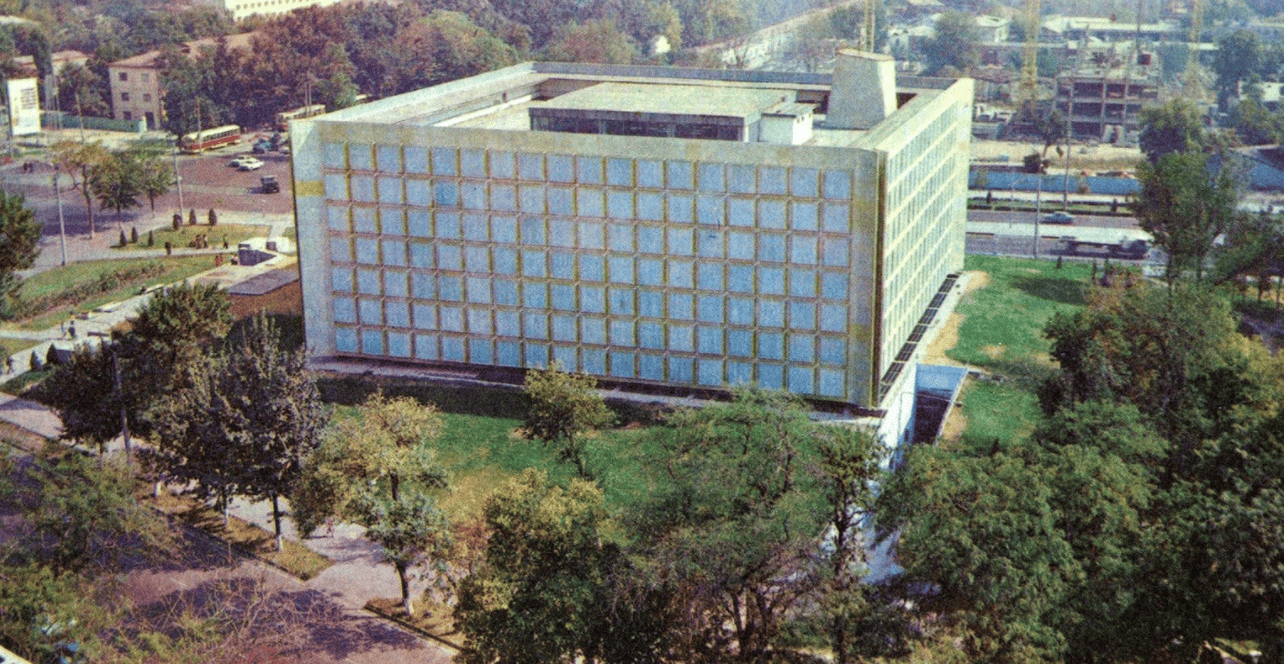
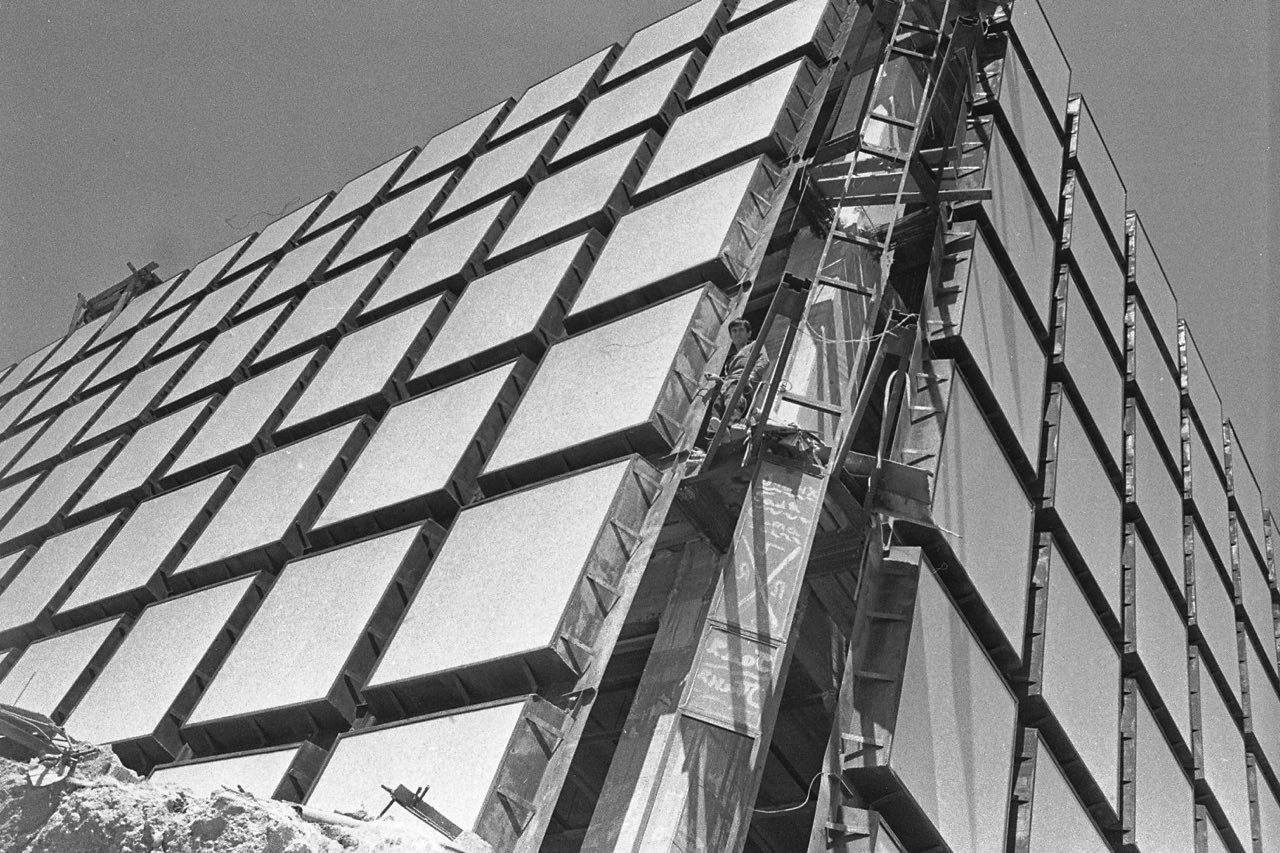
As Central Asia’s oldest art collection and one of Uzbekistan’s most expansive museums, the State Museum of Arts of Uzbekistan showcases an eclectic range of artifacts. These include unique finds from Uzbekistan, regional folk art, as well as Western European and Russian art spanning the fifteenth to the twentieth centuries. Among its most valued collections are Kushan sculptures from the first to third centuries and seminal works of Uzbek art from the 1920s and 1930s.
By the early 1960s, the museum’s original building had fallen into disrepair. Prompted by this, the Ministry of Culture began contemplating its reconstruction and expansion, consulting Tashkent architect Savely Rosenblum for the project. However, the devastating earthquake of April 26, 1966, inflicted severe damage on the building. Deemed beyond repair by experts, the collection was temporarily relocated, and the compromised structure was slated for demolition. Rosenblum, alongside his colleagues Iskander Abdulov and Anatoly Nikiforov, assumed responsibility for erecting a new museum on the site.
Rosenblum’s vision was notably experimental. At that juncture, the USSR had not yet seen the construction of any modernist art museums; existing ones were typically housed in historical buildings, often dating back to before 1917.
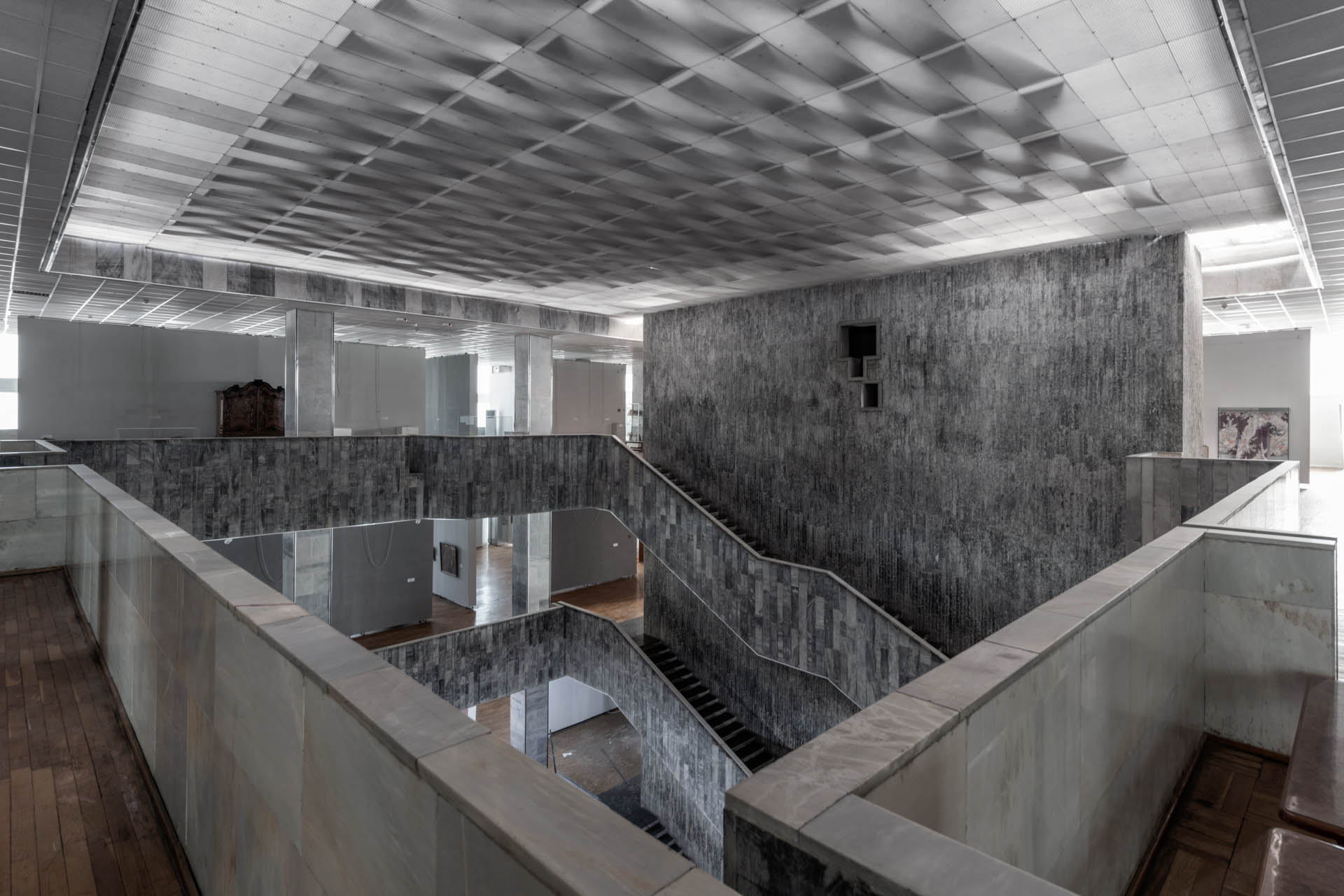
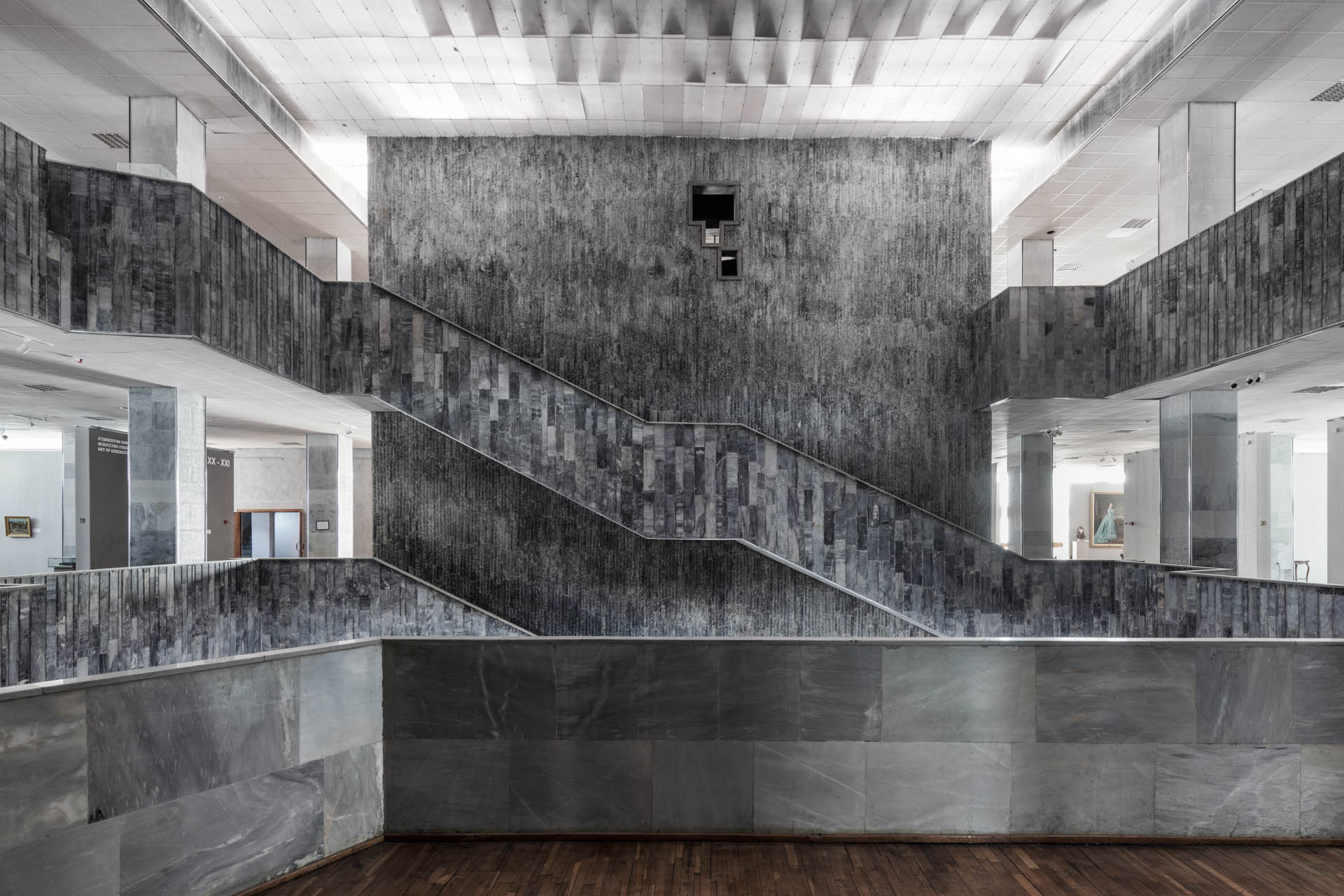
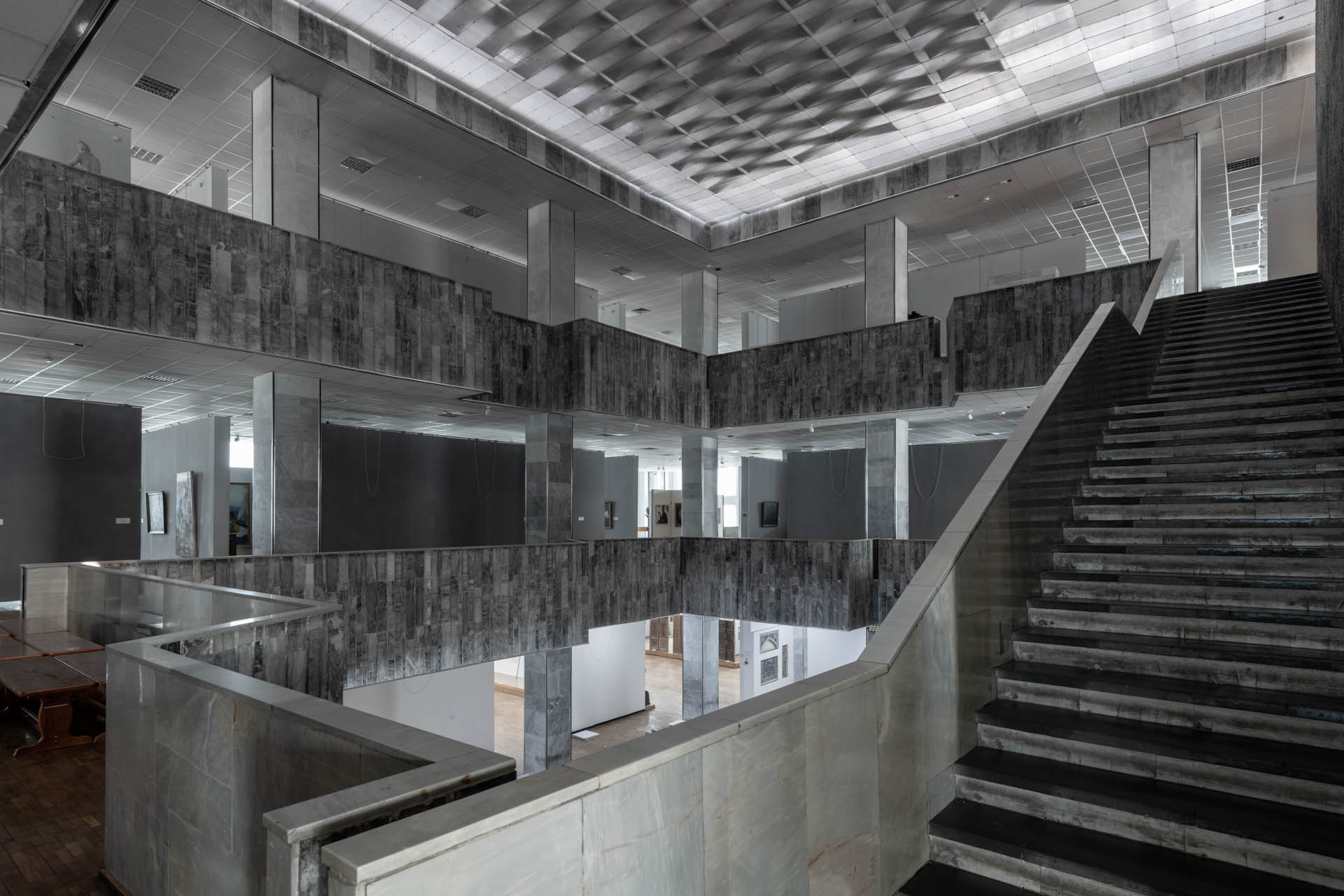
Architecturally, the building showcased stark modernist forms: a semi-cube perched on a green hill, outfitted with expansive square panels that diffused light in lieu of traditional windows. Softened by rounded corners, the cube’s walls mitigated its rigorous geometry. Within the interior, the design aimed for uniform illumination, achieved through the use of milky-colored glass panels. Consequently, the museum spaces enjoyed a gentle, even light devoid of harsh glares. In the evenings and at night, the transparent walls produced a luminescent crystal effect.
In terms of composition, Rosenblum’s design consisted of two cubic volumes. The first cube, measuring 18 meters on each side, was shaped by a three-level atrium around which various exhibition spaces were arranged. The second cube, partially submerged beneath the ground, defined the building’s façade. Its minimalistic form drew immediate comparisons with early twentieth-century avant-garde movements, most notably Suprematism. The external walls, adorned with rows of squares, further intensified this association.
Another potential influence on the museum’s design was Yale University’s Beinecke Rare Book & Manuscript Library, completed in 1963. A photograph of this library featured in the Architecture of the USA catalog, distributed at the seventh American exhibition in the USSR in 1965—a detail unlikely to have escaped Rosenblum and his team.
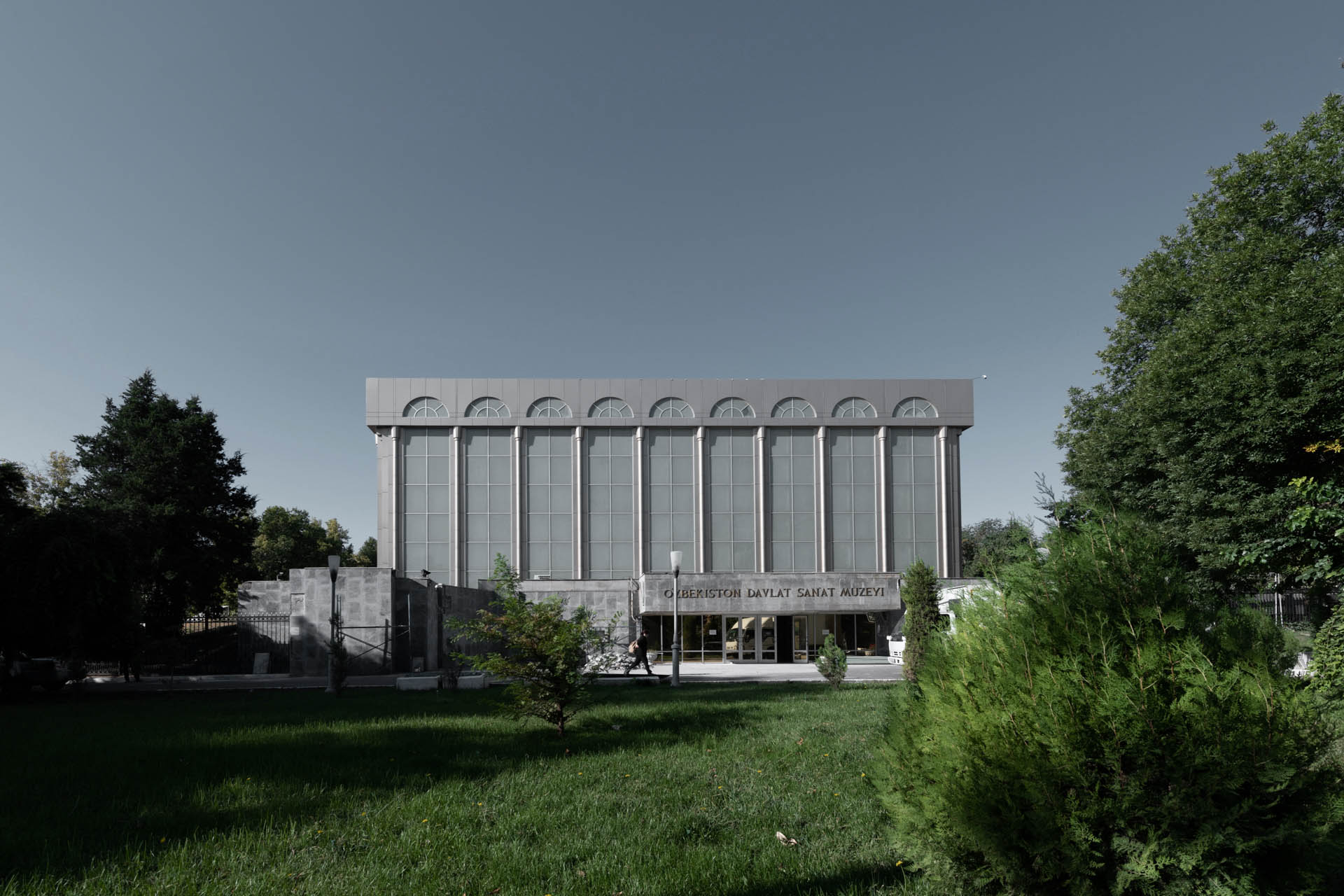
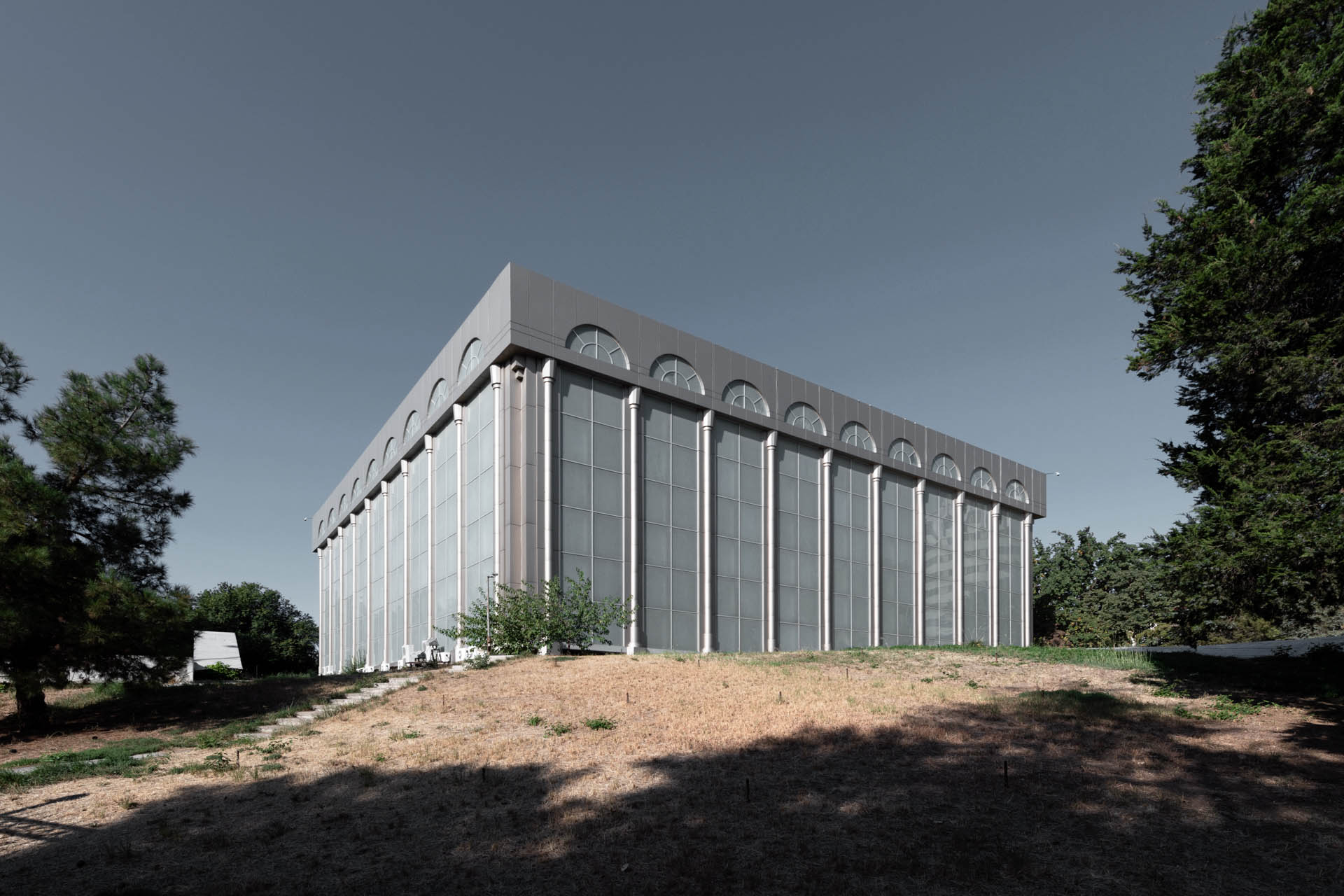
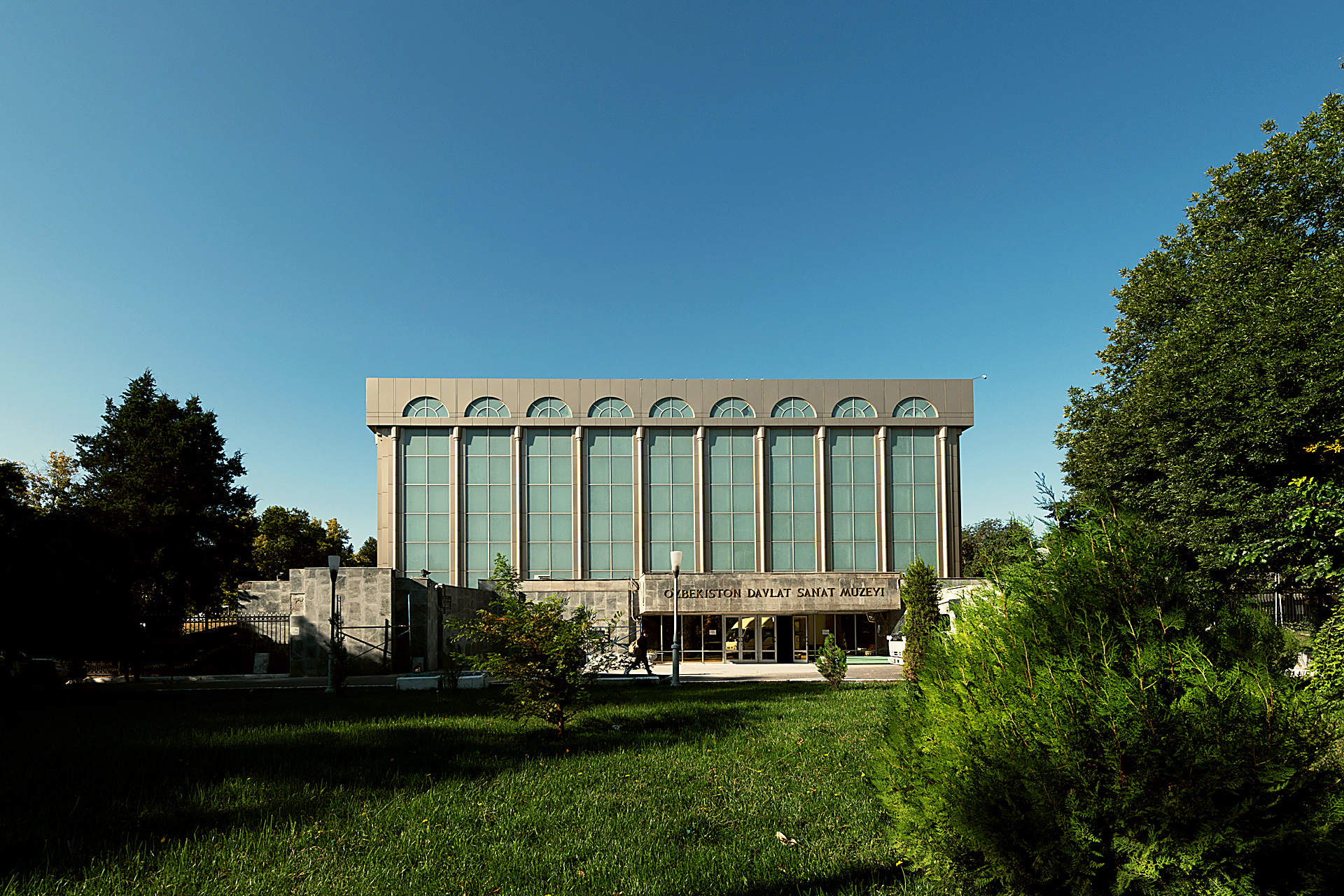
By the mid-1990s, the building’s materials had begun to show signs of wear, especially the aluminum sheets that clad the façade. Aging had altered their color and warped their shape due to frequent temperature fluctuations. Additionally, the museum’s original design language clashed with the architectural styles of the 1990s, which emphasized the use of historical motifs like pointed arches, blue domes, and classical orders. Instead of a thoughtful readaptation or renovation, a façade alteration was undertaken: the glass-panel walls were encased in a new matte glass façade, adorned with decorative columns and arches. Despite these changes, the museum’s interior has largely retained its original look and finish. Currently closed for a much-anticipated renovation, the museum’s façades are expected to be restored to their initial glory.
Modern Photos